
custom architectural millwork toronto projects succeed when the design, fabrication, finishing, and installation are treated as one connected system, not a set of separate trades.
In Toronto homes and condos, walls are rarely square, floors can slope, and older plaster can drift over decades. That reality is why premium millwork planning starts with site conditions and ends with a precise install that looks effortless.
This guide breaks down how bespoke woodwork fits Toronto residences, why local workshop fabrication matters, and which details deliver clean lines and long-term durability.
Integrating Bespoke Woodwork into Toronto Residences
Toronto renovations come with personality, especially in Victorian and Edwardian neighbourhoods where room proportions, trim profiles, and wall conditions vary from house to house. A custom architectural millwork toronto approach keeps those quirks from turning into visible gaps, awkward filler strips, or doors that never sit right.
- Adapting storage to historic layouts: Built-ins can follow chimney bumps, narrow halls, and shallow alcoves so the space feels intentional instead of “worked around.”
- Measuring for uneven plaster: On older walls, we plan scribed panels, fillers, and reveals so cabinetry sits flush and reads as part of the architecture.
- Matching existing trim: Wood species, grain direction, sheen level, and stain tone get coordinated with existing casing and baseboards so the millwork looks original to the home.
When the goal is a seamless result, custom architectural millwork toronto work often includes mockups or finish samples early. That small step prevents a common issue in Toronto renovations where new millwork looks “too new” against older trim.
Where this shows up most in real homes
These details matter most in entry built-ins, living room wall units, and kitchens where long cabinet runs amplify any out-of-square condition. In those spaces, custom architectural millwork toronto planning is the difference between an install that looks tight on day one and one that still looks tight after seasonal movement.
The Precision of Local Workshop Fabrication
On high-end builds, craftsmanship shows up at the joints, at the transitions, and in the finish consistency across every door and panel. Local fabrication also makes it easier to coordinate measurements and timelines when a project evolves during a renovation.
- Sourcing sustainable hardwoods: Using regional suppliers supports local industry and makes lead times easier to manage when matching species or veneer lots.
- Reviewing technical drawings: Shop drawings confirm joinery, structural support, door swings, appliance clearances, and clean transitions before anything is cut.
- Controlled finishing: Spraying coatings in a controlled environment helps reduce finish defects and supports more stable results when humidity shifts between seasons.
Wood movement is predictable when you plan for it. Many wood-industry resources recommend interior woodwork target moisture content in the general range of about 6–8% for stability in typical conditioned interiors, with adjustments depending on climate and indoor humidity control. That guidance reinforces why finishing and acclimation are treated seriously in a custom architectural millwork toronto workflow.
custom architectural millwork toronto quality checks that prevent callbacks
- Consistent reveals and door gaps across the full run
- Hardware alignment, soft-close tuning, and hinge-side clearances
- Edge durability on high-touch areas like pulls, integrated handles, and toe-kicks
If you want a deeper look at how RFP approaches design decisions and cost drivers, this overview is a helpful companion. Custom Millwork Design & Costs
Functional Storage for Modern Urban Environments
Condos and narrow Toronto footprints demand storage that works hard without making the space feel heavier. A custom architectural millwork toronto package often focuses on vertical height, hidden function, and finishes that stay consistent across open-concept sightlines.
- Floor-to-ceiling cabinetry: Full-height units use vertical volume that standard furniture leaves unused, especially in compact bedrooms, dens, and entry zones.
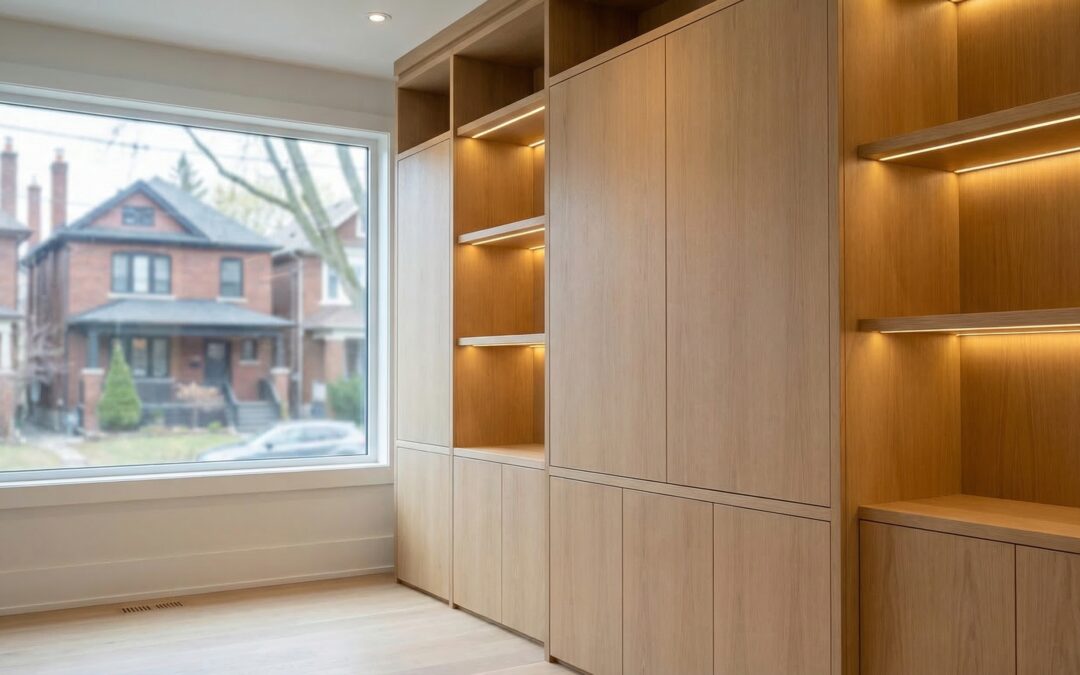
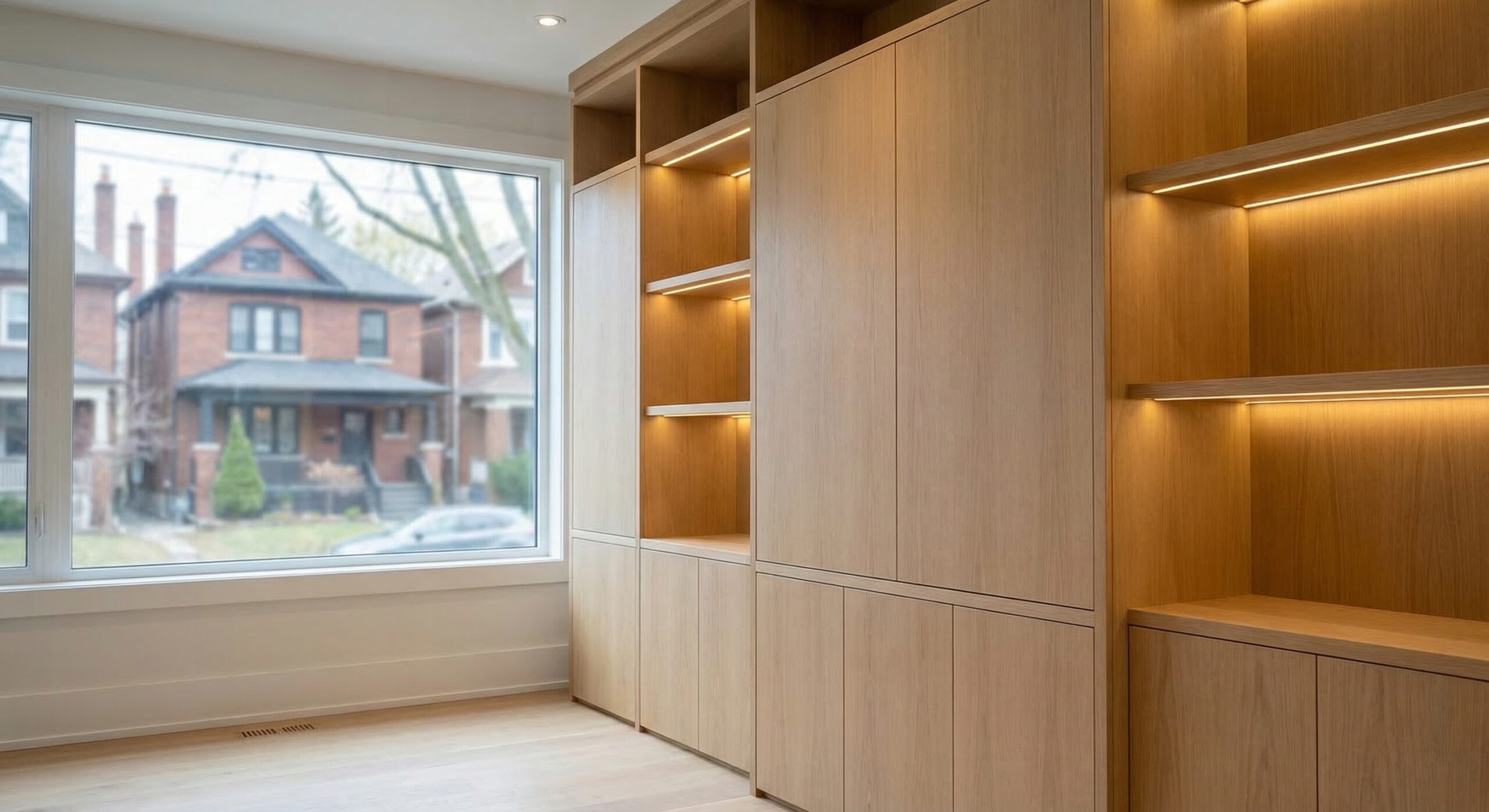
- Integrated lighting and hidden hardware: LED shelves, concealed fasteners, and minimal hardware keep visual lines clean and reduce clutter.
- Durable wood choices: Species like walnut and white oak hold up well in high-traffic areas when paired with the right coating system and edge detailing.
In practice, custom architectural millwork toronto for urban homes often includes smart “quiet” details such as charging drawers, broom pull-outs, tilt-out hamper fronts, or shallow utility cabinets that keep daily items out of sight.
Project Spotlight: Blue Bovine Steak + Sushi House
Blue Bovine at Union Station in Toronto needed a hospitality interior that could handle heavy service while presenting a polished, upscale atmosphere. RFP Design Group delivered a coordinated scope that included custom millwork, furniture, and architectural features, with standout elements like the cocktail and whiskey bar featuring integrated LED shelving, plus a host stand and service stations designed with concealed storage for day-to-day functionality.
The challenge centred on creating a refined look that still performs in a busy venue. The solution came through durable materials, clean detailing, and feature-driven fabrication that supports both the guest experience and staff workflow. You can see the full project here: Blue Bovine Steak + Sushi House.
Projects like this translate well to residential work because the same priorities apply. custom architectural millwork toronto should look sharp in perfect lighting and keep working when it gets used every day.
Planning Notes for a Smooth Build and Install
Most issues in custom architectural millwork toronto projects come from rushed site measurements, late appliance decisions, or unclear scope boundaries between trades. A smoother process usually comes from locking a few items early.
- Confirm ceiling heights and bulkheads after any drywall work is complete
- Finalize appliance specs and panel requirements before shop drawings are approved
- Decide where fillers belong so doors and drawers clear casing, radiators, and returns
If your project includes cabinetry, this builder-style guide expands on materials, storage planning, and install realities in Toronto homes. Designing Exceptional Custom Kitchen Cabinets in Toronto
FAQ
How long does a typical custom millwork project take to complete?
Most residential projects require six to ten weeks from the initial design approval to the final installation. Timelines can shift based on finish complexity, site readiness, and how quickly selections are confirmed.
Can custom cabinetry be installed in a condo with concrete walls?
Professional installers use specialized anchoring systems to securely mount units to various wall types found in modern buildings. That includes planning for concrete, steel studs, and conditions behind finished wall assemblies.
What is the difference between millwork and finish carpentry?
Millwork refers to items mass-produced or custom-made in a mill or workshop while finish carpentry involves the installation of those items on the job site.
Ready to Plan Your Custom Millwork in Toronto?
If you’re comparing options for custom architectural millwork toronto, bring your drawings, inspiration images, and a few site photos. With that, it becomes much easier to recommend materials, confirm what’s buildable, and map a timeline that fits your renovation schedule.