
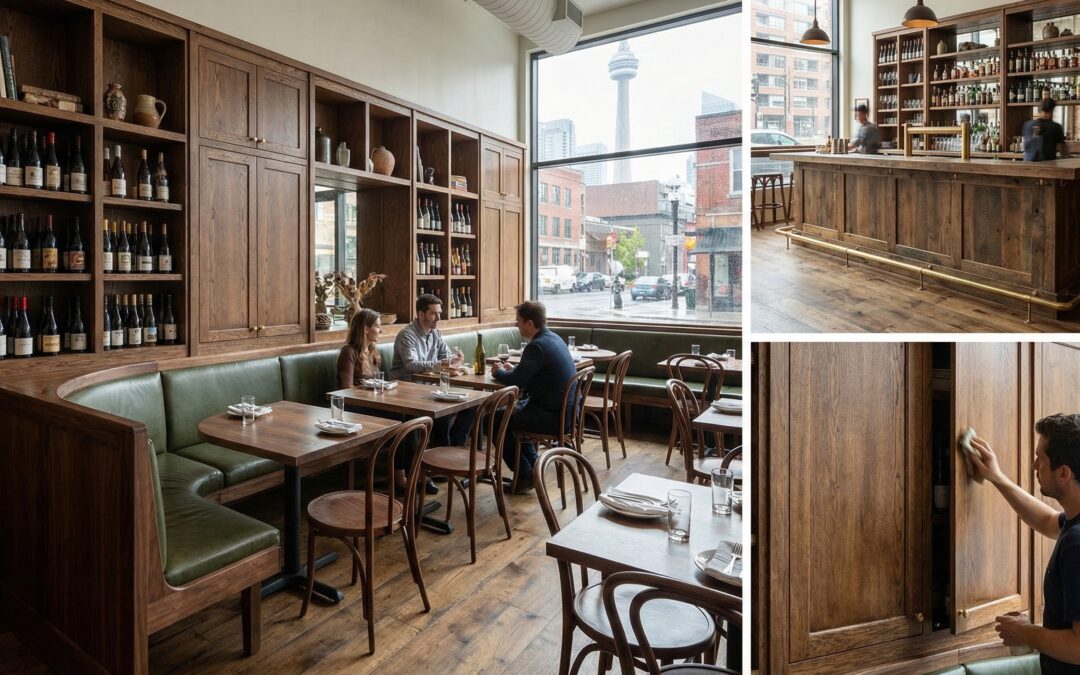
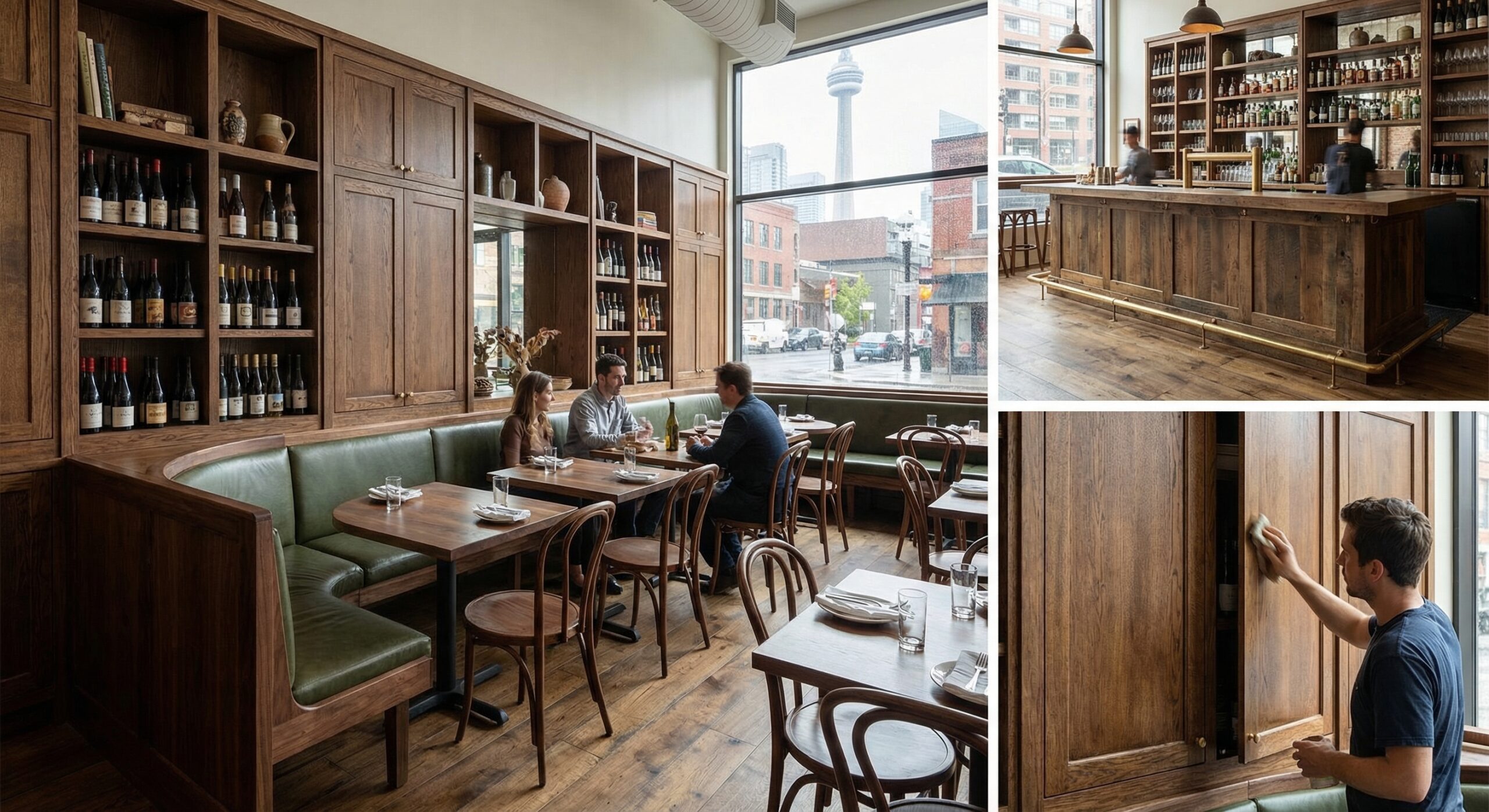
Custom restaurant furniture is one of the fastest ways to shape how a Toronto space feels, flows, and performs every day. When the millwork, seating, and built-ins are designed as one package, you get cleaner lines, better durability, and fewer compromises during installation.
This guide breaks down what “precision woodworking” looks like in real-world Toronto interiors, from downtown condos and heritage properties to busy hospitality spaces. If you’re planning a restaurant refresh or building from scratch, the details below will help you make choices that hold up under real use.
Defining Spaces with Expertly Crafted Woodwork
Good millwork helps a space function smoothly while keeping the design quiet and intentional. In hospitality projects, that often means combining storage, service needs, and customer comfort into elements that look architectural rather than “added on.”
- Integrating tailored storage and cabinetry into diverse floor plans so service areas, host stations, banquettes, and display zones support the way staff and guests actually move.
- Choosing wood species and finishes that harmonize with Toronto lighting, including north-facing windows, high-rise shadow lines, and warmer evening lighting that can shift how stains read.
- Prioritizing hand-finished durability and joinery longevity because high-touch surfaces (table edges, banquette caps, bar fronts) take constant wear in a restaurant environment.
Why surface prep and edge details matter in custom restaurant furniture
Edges, seams, and transitions get touched more than almost any other part of a room, so they tend to show wear first. For commercial woodwork, many teams lean on established architectural woodwork standards that specify expectations around sanding, edge-banding, and acceptable gaps at joinery, which helps keep quality consistent across a full millwork package. Those tolerance and finishing requirements are outlined by the Architectural Woodwork Institute (AWI). AWI’s standards and requirements provide a helpful reference point when you’re comparing proposals and finish schedules.
Tailored Solutions for Heritage Houses and Modern Condos
Toronto has plenty of architectural variety, and the millwork strategy changes based on what the building can realistically accept. A heritage interior may call for replication and restraint, while a condo or modern build often benefits from cleaner geometry and multi-use components.
- Designing multi-functional built-ins that maximize square footage in downtown units, where every inch counts and furniture needs to carry more than one job.
- Replicating historical trim and molding details to preserve the character of older properties, while still integrating modern mechanical clearances and updated layouts.
- Adapting contemporary design elements to meet structural needs across varied building types, including ceiling drops, bulkheads, and uneven existing conditions.
Translating residential precision into restaurant performance
Restaurant interiors tend to demand the same visual discipline as residential work, then add heavy daily use on top. That’s where custom restaurant furniture shines, since tables, banquettes, millwork, and trim can be engineered together rather than forced to fit after the fact.
If you’re evaluating options early, RFP Design Group’s overview page is a useful starting point because it lays out common material choices and the practical benefits of tailoring pieces to your layout. You can review it here: Custom Restaurant Furniture.
Project Spotlight: AP Restaurant (Toronto, ON)
AP Restaurant sits high above the city on the 51st floor at the Manulife Centre (55 Bloor Street West), which brings a clear set of performance requirements. The outdoor patio environment pushes materials and finishes harder than most interiors, and the project also needed a cohesive look that carried between outdoor and indoor zones.
Challenge: The outdoor furniture needed real weather resilience for year-round durability, and the full furniture set had to maintain a consistent design language between indoor and outdoor seating areas.
Solution: RFP Design Group designed and fabricated a suite of pieces that balanced durability with a refined look. The outdoor love sofas used marine-grade plywood frames with stainless steel bases, finished in sapele with weather-resistant sealant, and paired with UV-protected upholstery. The indoor furniture package focused on comfort and longevity as well, including bar stools crafted from solid oak with brushed brass footrests and dining elements built to suit the space. If you want the detailed breakdown of materials and the challenge/solution notes, see the case study here: AP Restaurant.
A Methodical Process from Shop Drawings to Installation
A predictable process keeps custom work from turning into surprises on site. The strongest outcomes usually come from a sequence that starts with precise documentation, stays controlled through fabrication, and ends with disciplined installation planning.
- Converting concepts into detailed shop drawings so dimensions, clearances, reveals, hardware, and field conditions are resolved before anything goes into production.
- Fabricating components in a controlled environment to maintain consistent fit and finish across large millwork runs and full furniture packages.
- Coordinating efficient on-site assembly to reduce downtime and disruption, especially important for restaurants working around opening dates.
How this process protects budgets on custom restaurant furniture
When custom restaurant furniture is built from approved drawings and paired with a clear install plan, it reduces the expensive stuff that shows up late, like rework, rushed finish touch-ups, and last-minute layout compromises. It also makes approvals easier for designers and ownership teams because everyone is looking at the same technical reference.
If you’re budgeting and scoping early, this cost guide can help frame expectations in plain terms: How Much Does Custom Millwork Cost?.
FAQ
What is the expected timeline for a custom millwork project?
Most projects span six to ten weeks from the final design approval to the completed installation though this varies based on the complexity and material sourcing. For custom restaurant furniture, timelines often depend on how quickly finishes are approved and whether the project includes coordinated on-site sequencing with other trades.
Do you provide on-site measurements and consultations?
We conduct thorough site visits to take exact measurements and discuss how the proposed woodwork will interact with the existing architecture and mechanical systems. That on-site check is especially important for custom restaurant furniture packages that include banquettes, host stands, bar elements, and wall-facing millwork where field conditions can drift from drawings.
Planning a Toronto project? Start with a clear brief
If you’re getting pricing or preparing drawings, bring these details to the first conversation so the design and fabrication team can respond accurately.
- Floor plan and a few interior photos (or a site walk date)
- Seating count targets, table sizes, and service flow needs
- Finish direction and lighting notes (daytime vs evening mood)
- Any durability requirements for patio exposure or heavy-turnover zones
Custom restaurant furniture works best when the functional constraints are clear early, since that’s what drives the engineering and finishing decisions that you’ll live with for years.
If you want help scoping a millwork or hospitality furniture package in Toronto, reach out here: https://rfpdesign.com/contact/.