
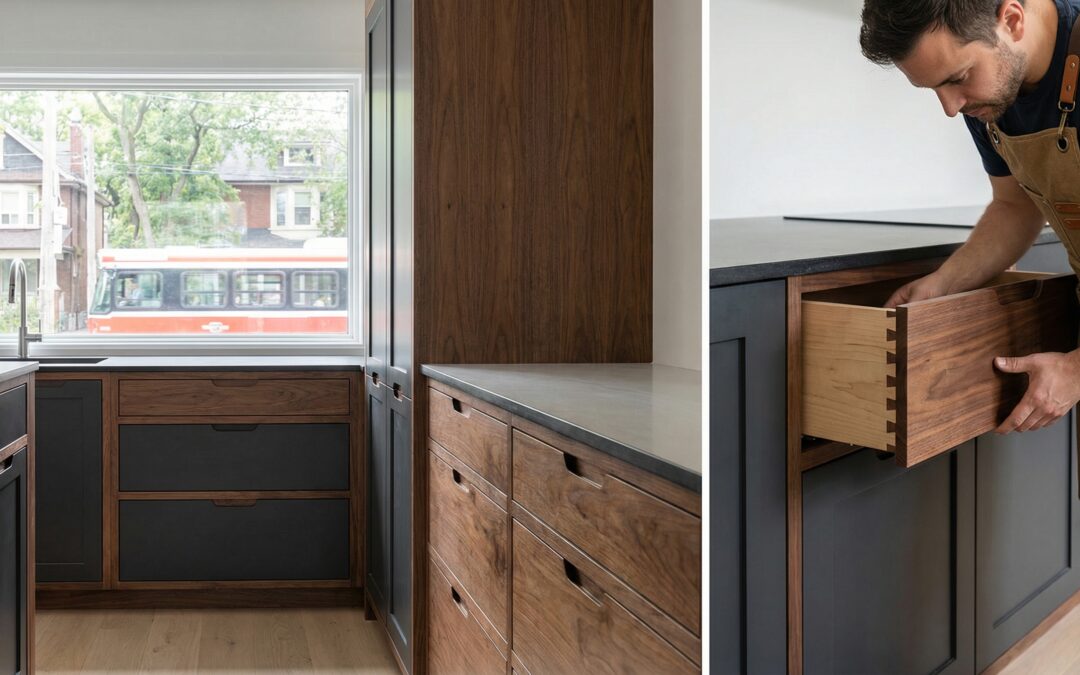
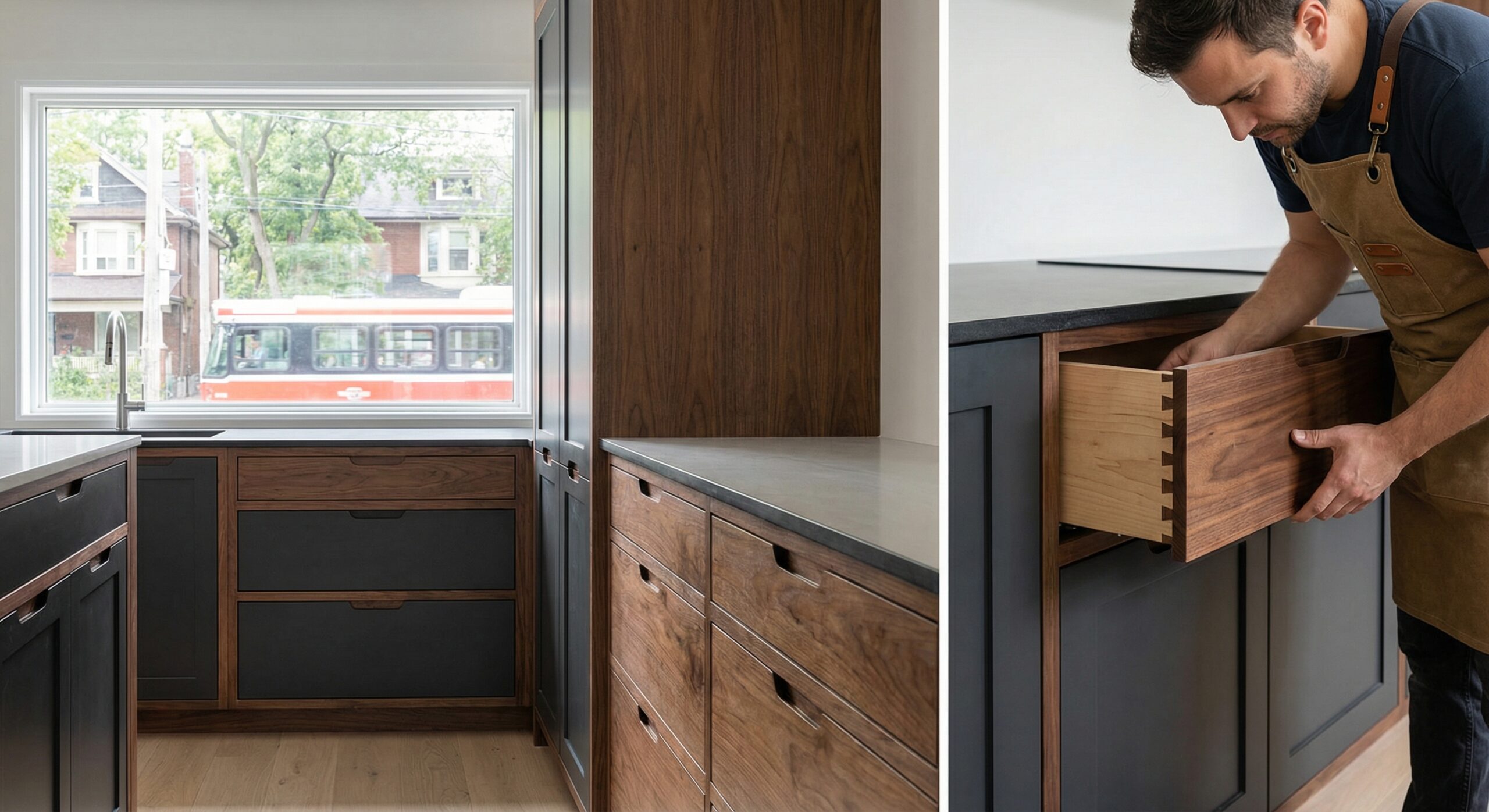
bocado collingwood is a great example of what happens when furniture is engineered to handle real daily wear, and that same mindset is exactly what Toronto homeowners should expect from custom kitchen cabinetry.
Toronto kitchens deal with tight condo footprints, older-house walls that are rarely perfectly square, and big seasonal humidity swings that can stress wood over time. When cabinetry is designed for your layout and built with the right materials, your kitchen feels intentional, functions smoothly, and stays looking consistent year after year.
If you are planning a renovation or upgrading a builder kitchen, custom millwork gives you control over fit, storage, finishes, and the small details that decide whether a kitchen feels calm or cluttered.
Precision Woodwork for Unique Residential Layouts
Pre-made cabinets are built around standard widths and assumptions about wall conditions. In many Toronto homes, those assumptions fall apart quickly, especially in older neighbourhoods and condo units where corners, bulkheads, and plumbing chases create awkward constraints.
- Cabinetry built to your floor plan avoids filler strips and odd gaps, so your runs look clean and intentional.
- Wood selection that stays stable through humid summers and dry winters helps doors and drawer fronts keep their alignment.
- Artisanal finishing creates a resilient surface that stands up to fingerprints, splashes, and daily wipe-downs.
A good custom build starts by treating your kitchen as a measured space, not a template. When the design accounts for real site conditions early, you get a result that looks built-in rather than installed.
Why seasonal movement matters in Toronto homes
Wood responds to changes in indoor relative humidity, which means a kitchen can feel different in February than it does in July. Industry guidance often recommends keeping indoor relative humidity in a controlled band to reduce swelling and shrinkage that shows up as sticking doors, shifting reveals, or hairline lines at joints. For many wood products, keeping indoor RH roughly in the 25% to 55% range helps maintain more stable moisture content over time.
For a straightforward reference on indoor RH targets for wood interior products, the Architectural Woodwork Institute (AWI) care and storage guidance cites a 25% to 55% RH range for climate-controlled interiors in much of the U.S. and Canada.
External resource: Wood and moisture guidance (IIBEC, citing USDA Forest Service data).
The Practical Benefits of Local Manufacturing
When you are investing in custom kitchen cabinets in Toronto, local manufacturing changes the experience in ways that matter on install day and in the months after. Fewer handoffs and tighter coordination typically mean fewer surprises.
- Producing in a Toronto-area facility supports tighter quality control and more reliable lead times.
- On-site measurements help the final install align with your existing walls, floors, and ceiling lines.
- Direct communication with the craftspeople makes it easier to fine-tune details like door profiles, reveals, and finish matching.
Local production also helps when a renovation schedule shifts, which happens often in Toronto projects that depend on permits, elevator bookings, and trade sequencing. Clear shop drawings, a controlled fabrication process, and a coordinated install plan keep the project moving in a predictable way.
If you want a closer look at how professional millwork projects are typically measured, designed, fabricated, and installed, this guide gives useful context: https://rfpdesign.com/blog/custom-millwork-toronto-2/.
Project Spotlight: Bocado Collingwood
bocado collingwood is a hospitality project where the furniture had to handle constant use, fast cleaning, and repeated service cycles without losing its visual consistency. The client needed seating that looked warm and refined while still performing like commercial-grade equipment.
RFP Design’s solution focused on a modular, serviceable banquette and sofa system used across multiple zones, including the main dining room, bar, and wine cellar. The build strategy emphasized durable cores, stable construction, and protection in high-contact areas, so the pieces could hold up through daily resets and years of wear.
- Challenge: Maintain a tight visual language across zones while building seating that could take real hospitality wear.
- Solution: Modular banquettes and sofas engineered for serviceability, with durable substrate choices and scuff-resistant base protection where it matters most.
You can view the full project details here: https://rfpdesign.com/project/bocado-collingwood/.
For homeowners, the takeaway from bocado collingwood is simple. When you build for heavy use and long maintenance cycles, your finished work keeps its shape, feel, and look longer. Kitchens are not restaurants, but they still see constant touch, cleaning, and impact around toe-kicks, sink bases, and high-traffic drawers.
Designing for Both Efficiency and Appearance
A kitchen can look beautiful and still be frustrating to use if storage and hardware were treated as an afterthought. Custom design gives you the chance to plan day-to-day routines into the cabinetry so everything has a logical home.
- Integrated storage such as pull-out organizers, spice pull-outs, recycling systems, and custom dividers helps busy kitchens stay orderly.
- High-quality hardware and soft-close mechanisms keep drawers and doors feeling smooth and solid over time.
- Thoughtful material selection creates a cohesive look that fits the architecture, whether you live in a heritage semi, a modern infill, or a downtown condo.
bocado collingwood design thinking, translated to a Toronto kitchen
In bocado collingwood, the seating system was designed around the guest experience and operational realities, which meant the aesthetic choices were supported by engineering choices. That approach translates cleanly to kitchens.
When drawer stacks are planned around how you cook, when the toe-kick zones are protected where they get kicked, and when finishes are chosen for the way you actually live, the kitchen stays easier to use. That is how you avoid the common regret of a “nice-looking” renovation that wears poorly.
If you are deciding between stain and paint, or you need guidance on how finish choice affects maintenance and touch-ups, this article is a helpful starting point: https://rfpdesign.com/blog/shades-and-colours-wood-staining-vs-wood-painting/.
If you want to get more specific about wood grain and board selection, this overview of lumber cuts helps explain why certain cuts behave and look different over time: https://rfpdesign.com/blog/different-cuts-of-wood-what-they-are-and-why-they-matter/.
FAQ
How long does the installation process typically take?
Most kitchen installations are completed within three to five business days once the cabinetry arrives at your home.
Can you match new cabinets to my existing home finishes?
Our finishing team can stain and paint new woodwork to ensure it blends naturally with your current floors or trim.
Ready to Plan Custom Kitchen Cabinets in Toronto?
If the durability thinking behind bocado collingwood is the standard you want in your kitchen, the next step is a conversation about your layout, your storage needs, and the finishes you want to live with every day.