
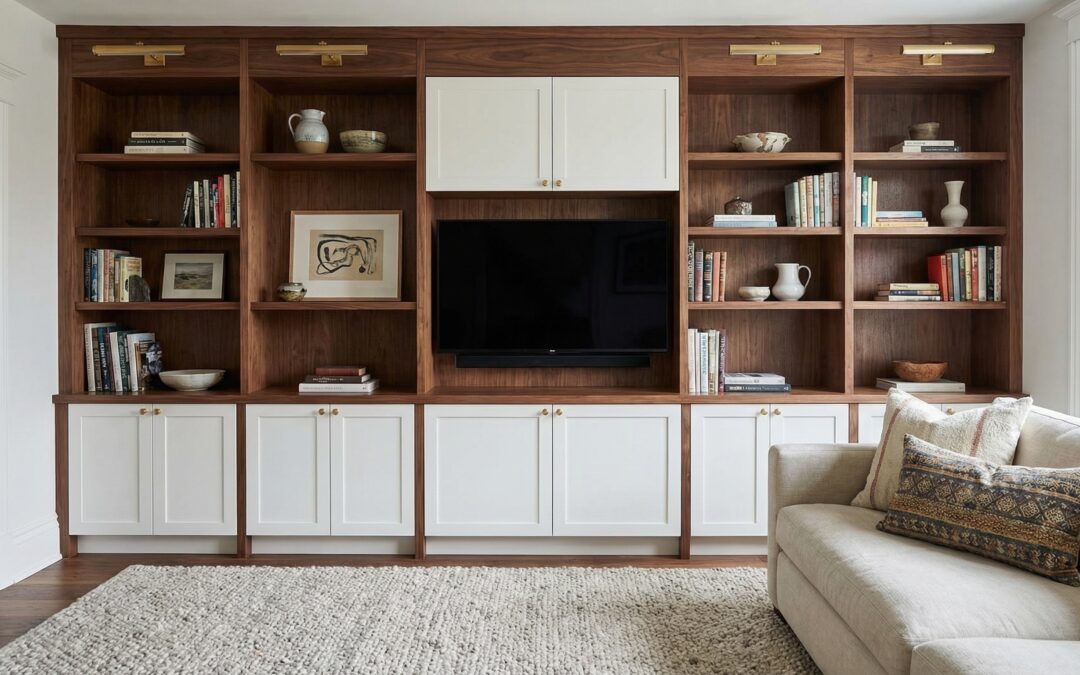
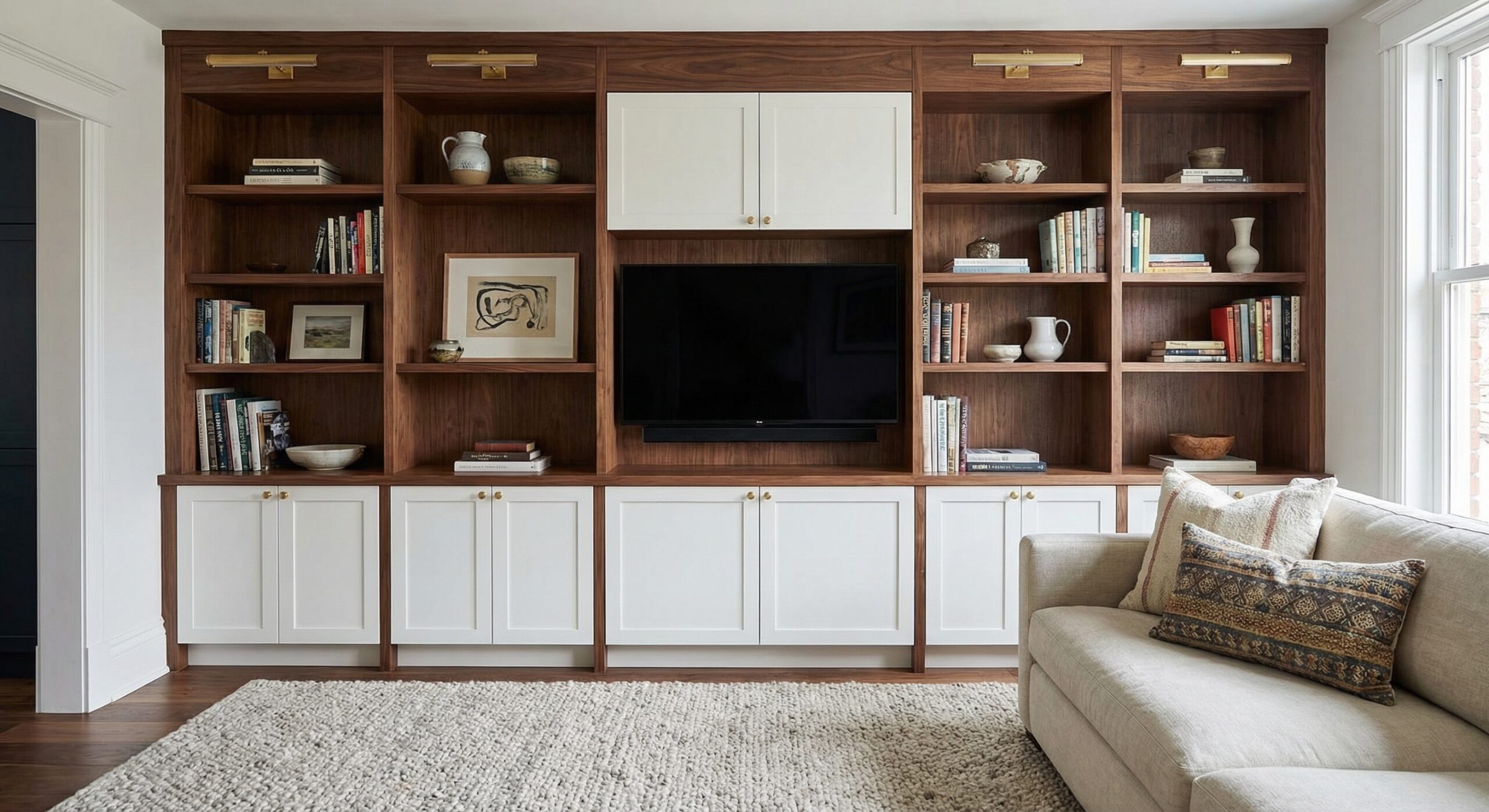
ff&e interior design decisions show up in daily life when a Toronto home needs storage that looks intentional, functions smoothly, and holds up through constant use.
Custom built-in cabinets solve the layout problems that come with narrow downtown footprints, open-concept condos, and older homes with walls that rarely sit perfectly square. Done well, they also help your space feel calmer because everything has a defined place.
This guide walks through how RFP Design approaches built-ins with a millwork-first mindset, while keeping ff&e interior design priorities like durability, clean installation, and long-term maintenance front and centre.
Maximizing Efficiency in Local Residential Spaces
Toronto homes often ask you to do a lot with a little. That’s where custom built-ins earn their keep in ff&e interior design, since you can design storage around real dimensions instead of forcing standard cabinetry into awkward gaps.
Developing storage that fits narrow downtown floor plans
In tighter spaces, depth and clearances matter as much as style. A well-designed built-in can keep walkways open while still adding meaningful storage.
- Use shallower cabinet depths in corridors or near entry doors so the space stays comfortable to move through.
- Build in closed storage for clutter-heavy items, then mix in a few open niches where you want display.
- Plan around outlets, baseboard heaters, and returns so the final install looks seamless instead of “worked around.”
Creating functional zones in open-concept condos
Open layouts look great until everything lands in one visual pile. In ff&e interior design planning, built-ins help define “where things happen” without putting up walls.
- Media walls can anchor the living area while hiding networking, wiring, and equipment.
- Low cabinetry can divide a dining area from a living space while keeping sightlines open.
- Integrated benches with storage can create an entry drop-zone that condos often lack.
Using vertical space in homes with high ceilings
Toronto’s mix of loft conversions and older homes often brings higher ceilings, which can become wasted space without a plan. Built-ins let your ff&e interior design work harder by capturing height for storage and proportion.
- Extend cabinetry to the ceiling to reduce dust-catching ledges and maximize volume.
- Add upper doors for seasonal storage, and keep daily-use items in the lower, ergonomic zone.
- Use vertical paneling details to make the built-in feel architectural rather than oversized.
Selecting Durable Materials for the Toronto Climate
Seasonal swings can be tough on woodwork. A thoughtful material plan helps built-ins stay crisp and aligned, which supports ff&e interior design goals around longevity and predictable performance.
Choosing hardwoods that resist seasonal humidity shifts
Wood movement is real, particularly when indoor humidity changes through winter heating and summer humidity. The right construction approach and acclimation practices reduce risk, and industry standards emphasize controlling jobsite conditions and acclimation before install. AWI’s Care & Storage guidance outlines storage protection and acclimation practices, including a minimum acclimation period before installation.
- Use stable core materials and engineered panels where appropriate for larger cabinet runs.
- Specify solid wood strategically for doors, trim, and visible details where it brings value.
- Confirm the home is in a suitable condition for delivery and installation so the millwork isn’t exposed to wet trades or uncontrolled humidity.
Applying finishes that maintain their appearance over time
Finishes do more than set the colour. They protect surfaces from cleaning, abrasion, and sunlight, and they influence how a built-in ages in a real home. In ff&e interior design, finish selection is part performance planning.
- Choose a finish system based on how the built-in will be used, such as mudroom storage versus a living room feature wall.
- Plan sheen intentionally, since higher-gloss surfaces show defects and fingerprints more quickly.
- Consider touch-up strategy early so inevitable wear can be addressed cleanly.
Evaluating hardware options for daily heavy use
Hardware is where “custom” either feels premium or starts failing. Strong ff&e interior design specs include hinges, slides, and pulls designed for frequency, load, and user comfort.
- Use soft-close, heavy-duty drawer slides for deep drawers, especially in media or pantry-style built-ins.
- Match pull size and placement to door width so the cabinet feels balanced and easy to operate.
- Confirm door swing and drawer clearances in tight rooms to prevent collisions with adjacent walls and furniture.
Tailoring Designs to Existing Home Architecture
Built-ins look best when they feel like they belong to the home. That alignment is a core part of ff&e interior design, particularly in Toronto where one street can hold Victorian, mid-century, and modern infill side by side.
Matching millwork to traditional Victorian baseboards
In older Toronto houses, existing trim details often have strong character. Built-ins can pick up that language through profiles, reveals, and proportions so the final result reads as original.
- Replicate baseboard heights and casing profiles where appropriate.
- Use consistent shadow lines so new millwork doesn’t look “stuck on.”
- Plan for imperfect floors and walls during design so the install can be tight without forcing pieces out of level.
Integrating sleek cabinetry into modern industrial lofts
Lofts often call for cleaner lines, durable finishes, and a balance between warm wood and metal details. In ff&e interior design, this is where integrated lighting, concealed fasteners, and precise alignment make a visible difference.
- Use flat-panel doors and consistent reveals for a crisp, architectural look.
- Coordinate metal finishes with existing elements like railings or window frames.
- Build in cable management, ventilation, and access panels where equipment is involved.
Complementing existing woodwork and flooring tones
The fastest way for a built-in to feel “off” is a stain or paint tone that fights the floor. A careful sampling process helps your ff&e interior design selections land correctly in the home’s lighting.
- Review samples in the actual room during day and evening light.
- Decide early whether you want a close match or a deliberate contrast.
- Keep undertones consistent across wood species, stain, and adjacent finishes.
Project Spotlight: Cherrys High Dive – 488 Wellington
While this project is hospitality-focused, it’s a clear example of how RFP Design applies ff&e interior design thinking to built elements, materials, and installation constraints. The Cherrys High Dive – 488 Wellington project in Toronto required custom fabrication and installation of millwork, furniture, and architectural elements across both the main level and basement.
Challenge: The space needed premium finishes and a refined look, while still performing in a high-traffic environment. The project also required custom elements to align cleanly with the existing structural layout.
Solution: RFP delivered a package that included front and back bar millwork with Red Oak veneer counters and brushed bronze accents, plus feature shelving with brass inlays and lighting. For fit and integration, the team used CNC precision-cutting and modular installation techniques. For long-term durability, the finishes and construction choices included protective coatings and reinforced substrates suited for heavy daily use.
If you’re planning built-ins for a Toronto home, the same principles apply. Your cabinetry still needs accurate drawings, controlled conditions, clean scribing, and finish choices that stay sharp under real wear, which is where experienced ff&e interior design and millwork execution make the difference.
Managing the Custom Millwork Project Timeline
A smooth project relies on clear steps and clear handoffs. In ff&e interior design projects, delays often show up when trades overlap incorrectly or when decisions get pushed too late.
Moving from initial measurements to shop drawings
Measurements are the start, then shop drawings turn intent into buildable details. This stage protects your timeline because it catches conflicts before anything is fabricated.
- Field measure to capture real walls, floors, soffits, and obstructions.
- Review shop drawings carefully for door swings, clearances, and appliance or TV dimensions.
- Lock key selections early, including finish, hardware, and any integrated lighting.
Preparing the space for a clean installation
Installation goes faster when the site is ready. Many ff&e interior design issues come down to jobsite sequencing, not the cabinetry itself.
- Confirm painting and flooring stages so finished millwork does not get damaged by later trades.
- Ensure HVAC is operating and the space is clean and dry before delivery.
- Plan access and protection for elevators, hallways, and tight stairwells where needed.
Finalizing details through precise on-site scribing
Toronto homes, especially older ones, often have walls that wave and corners that drift. On-site scribing keeps built-ins tight to the architecture, which is central to high-quality ff&e interior design results.
- Scribe fillers and panels so face frames and end panels sit flush.
- Adjust for out-of-level floors so doors and reveals stay consistent.
- Finish with careful caulking and touch-ups that maintain clean lines without hiding poor fit.
Frequently Asked Questions
How do you handle uneven walls in older Toronto houses?
Our team uses specialized scribing techniques to ensure cabinets sit flush against historical masonry or plaster. This approach supports ff&e interior design quality standards because it prevents gaps, reduces shadowing, and keeps reveals consistent.
Are the finishes safe for indoor air quality?
We utilize low-VOC coatings that protect your home environment while providing a durable surface. If indoor air quality is a key priority in your ff&e interior design plan, we can walk you through finish options and performance expectations during the specification stage.
Next Steps: Plan Your Built-Ins with RFP Design
If you’re weighing timelines, material choices, or how built-ins should integrate with the rest of your home, it helps to see how a custom team thinks about process end to end. You can also browse related guidance on our site, including What Is FF&E: A Comprehensive Guide by RFP Design Group and What Is Custom Millwork?
When you’re ready to discuss scope, budgets, and a realistic schedule, contact the team here: https://rfpdesign.com/contact/