
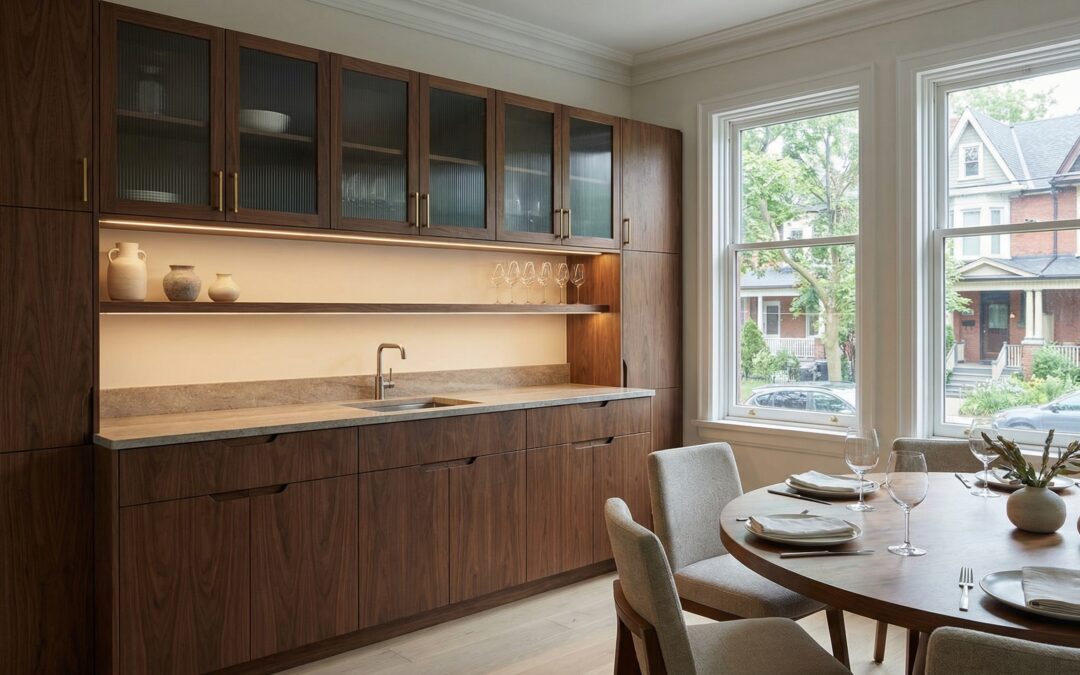
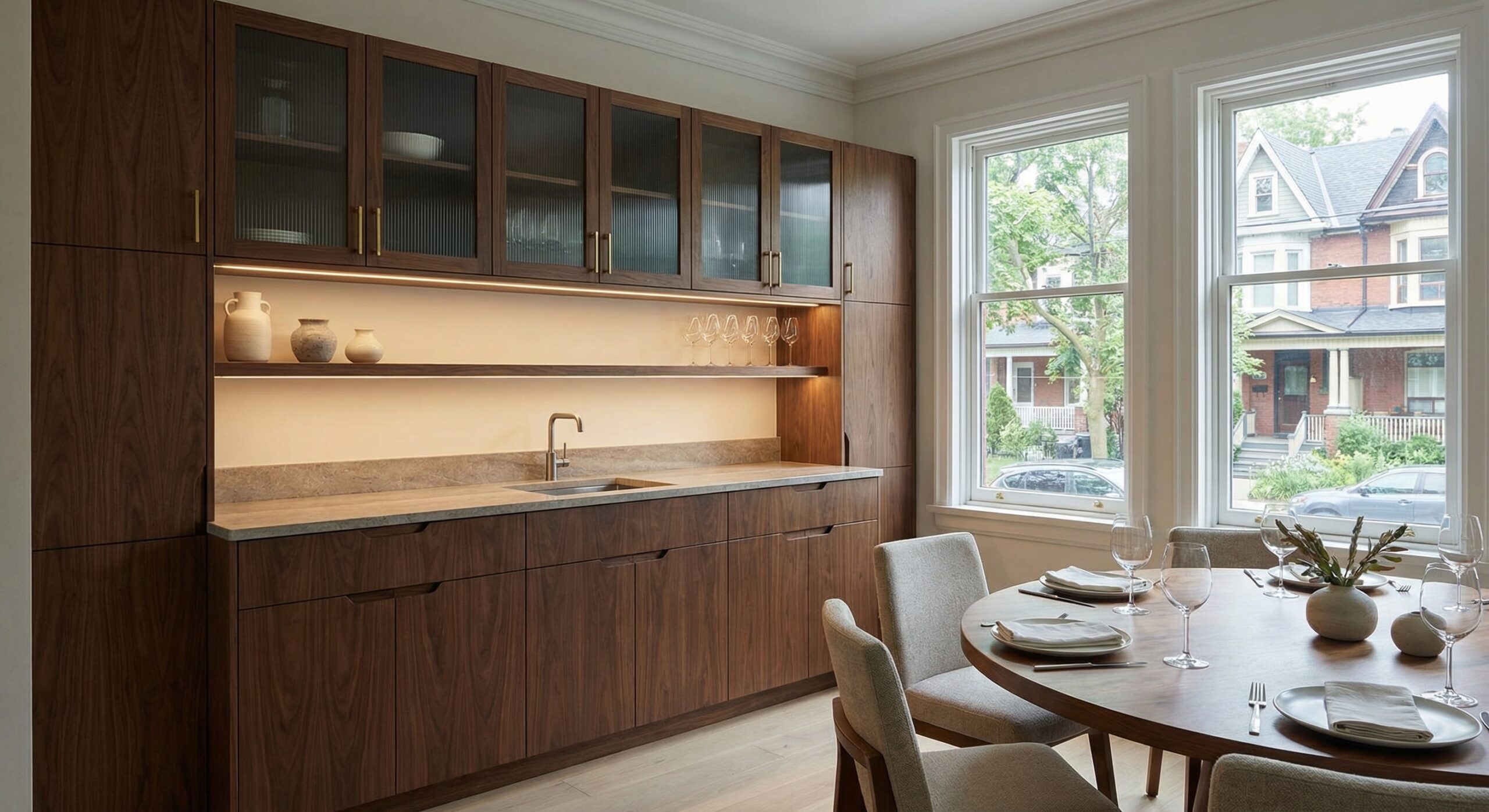
trapezi private dining is a great example of what careful millwork looks like when every line needs to land cleanly, and that same level of detail is exactly what Toronto homeowners want in custom built-in cabinets.
At RFP Design, we design and build built-ins that fit real Toronto conditions, including uneven plaster, tight condo clearances, and older homes that are rarely square.
If you want storage that looks like it was always part of the architecture, a custom built-in is usually the cleanest way to get there.
Efficient Storage Solutions for Urban Floor Plans
Toronto homes and condos demand storage that respects the footprint. The goal is to create space where you live day-to-day, without making rooms feel heavy or overfilled.
Vertical shelving that fits high-ceiling Toronto homes
In many Victorian and Edwardian homes across neighbourhoods like Leslieville, The Annex, and Roncesvalles, ceiling height is an advantage when you use it intentionally.
- Tailor-made shelving units can run floor-to-ceiling to capture vertical storage without widening the room’s visual profile.
- Adjustable shelf spacing keeps the unit useful over time as your needs change.
- Upper storage can be planned for seasonal items, overflow books, or display pieces that still feel curated.
Sleek media centers for downtown condo living
Condo floor plans often need one wall to do multiple jobs. A built-in media wall can hold AV equipment, hide cables, and provide closed storage that reduces visual clutter.
- Streamlined cabinetry can be designed around TV size, speaker placement, and ventilation needs.
- Integrated wire management keeps everything accessible while staying out of sight.
- Closed storage below helps keep the room calm, especially in open-concept layouts.
Hidden compartments and integrated desks for work-from-home
Work-from-home setups work better when they can disappear at the end of the day. Built-ins make that possible without sacrificing function.
- Integrated desks can sit within bookcases, alcoves, or hallway niches.
- Pull-out work surfaces and concealed printer storage help keep the footprint tight.
- Hidden compartments are useful for chargers, routers, files, and anything you don’t want on display.
If you’re still deciding what style fits your home, our millwork team regularly helps clients translate inspiration into something buildable and durable. You can get a feel for how we approach materials and detailing in our overview on what custom millwork is.
The Benefits of Local Millwork and Craftsmanship
Built-ins look simple when they’re done well. That effect comes from precise fabrication, careful finishing, and an installation plan that accounts for Toronto’s building realities.
Precision milling for older walls and real-world conditions
Many older Toronto homes have walls that bow slightly, floors that slope, and corners that drift out of square. Custom millwork allows the cabinet to be scribed and fitted so it sits flush.
- Tight reveals and clean shadow lines help the built-in read like part of the home’s structure.
- Panel alignment and door spacing stay consistent, even when surrounding surfaces aren’t.
- Trim integration can be planned so transitions look intentional instead of patched together.
Materials and finishes that handle Ontario seasonal shifts
Toronto swings from dry heated interiors in winter to humid summers. Material choices and construction methods need to respect seasonal movement so doors stay true and finishes hold up.
- Stable substrates and proper joinery reduce the risk of warping over time.
- Durable finishes are selected based on where the built-in lives, including sun exposure and daily wear.
- Hardware choices can be matched to usage patterns, especially for high-touch areas like mudrooms and family rooms.
Direct collaboration leads to better design decisions
When the designer, builder, and installer collaborate early, you avoid the common issues that show up late, such as trim conflicts, unusable depths, or outlets in the wrong spot.
- You get a built-in that reflects how you actually use the room.
- Details like lighting, toe-kicks, and handle placement feel consistent and intentional.
- There’s less guesswork during installation because decisions were settled upfront.
For homeowners who want a clearer sense of costs and what drives them, it helps to review a pricing breakdown before you start. Our post on how much custom millwork costs provides a helpful starting point for planning.
Project Spotlight: Trapezzi Private Dining
Our work for trapezi private dining shows how custom fabrication can shape an experience through details you feel immediately, even when you can’t quite name them.
Challenge: The Trapezzi team needed a refined private dining environment with millwork and furniture that balanced traditional warmth with a modern look, while meeting a tight opening timeline.
Solution: RFP Design delivered custom millwork and furniture elements that included walnut veneer bar counters with blackened brass detailing, integrated LED-lit shelving, window wood shades and louvers in premium walnut, and wall millwork with deep blue oak paneling. To stay on schedule, the project used pre-fabrication planning paired with a coordinated on-site installation process.
You can see the full case study and scope details here: Trapezzi Private Dining.
When homeowners ask how this relates to built-ins, the connection is direct. The same precision that supports trapezi private dining in a hospitality setting helps built-in cabinets land cleanly against real walls, align properly, and look intentional from every angle.
A Seamless Installation Process from Start to Finish
Custom built-ins should feel exciting, not disruptive. A good installation plan keeps the site clean, protects finishes, and avoids last-minute surprises.
Onsite measurements that prevent gaps and alignment issues
Accurate measuring is the difference between a built-in that looks crisp and one that needs cover-up trim everywhere.
- Detailed onsite measurements confirm wall conditions, floor level, and ceiling consistency.
- Electrical, HVAC, and baseboard details get flagged early so the design works with your home, not against it.
- Final shop drawings can be coordinated with your contractor if other renovations are happening at the same time.
Planning that reduces disruption in lived-in homes
Many Toronto projects happen while clients live at home, especially in condos and family neighbourhoods where moving out for millwork is not practical.
- Install days are scheduled around building rules, elevator bookings, and quiet hours when needed.
- Work zones are contained so the rest of the home stays functional.
- Prefabrication reduces on-site cutting, dust, and time inside the unit.
Hardware selection that finishes the job properly
Handles and pulls are small choices that show up every day. The right selection also impacts how cabinetry feels to use.
- Soft-close hinges and slides improve daily use and reduce wear.
- Finish selection can match existing metals in the home, such as faucets and lighting.
- Knob and pull placement is planned for comfort, especially in tall pantry-style doors.
If you’re comparing built-ins to furniture or wondering where millwork fits in a larger renovation, our team often starts with a simple conversation about function, layout, and what you want the room to feel like. That clarity is part of why clients associate our work with the same care seen at trapezi private dining.
FAQ: Custom Built-In Cabinets in Toronto
What is the typical timeline for a custom built-in project in Toronto?
Most projects take between six and ten weeks from the initial design consultation to the final installation day.
Can built-in cabinets increase a home’s resale value?
High-quality millwork often appeals to buyers because it offers permanent storage solutions and a polished look that portable furniture cannot match. For a general cost and value overview, Angi’s built-in cabinet cost guide is a helpful reference: How much do built-in cabinets cost (Angi).
Which rooms are best suited for custom built-ins?
Living rooms and home offices are popular choices though mudrooms and bedroom alcoves also benefit significantly from customized storage.
Ready to Plan Your Built-In?
If you’re considering custom built-ins for a Toronto condo, a Victorian home, or a full renovation, we can help you define the layout, select materials, and plan an install that stays clean and predictable. The craftsmanship principles that shaped trapezi private dining translate well into residential cabinetry where fit and finish matter every day.