

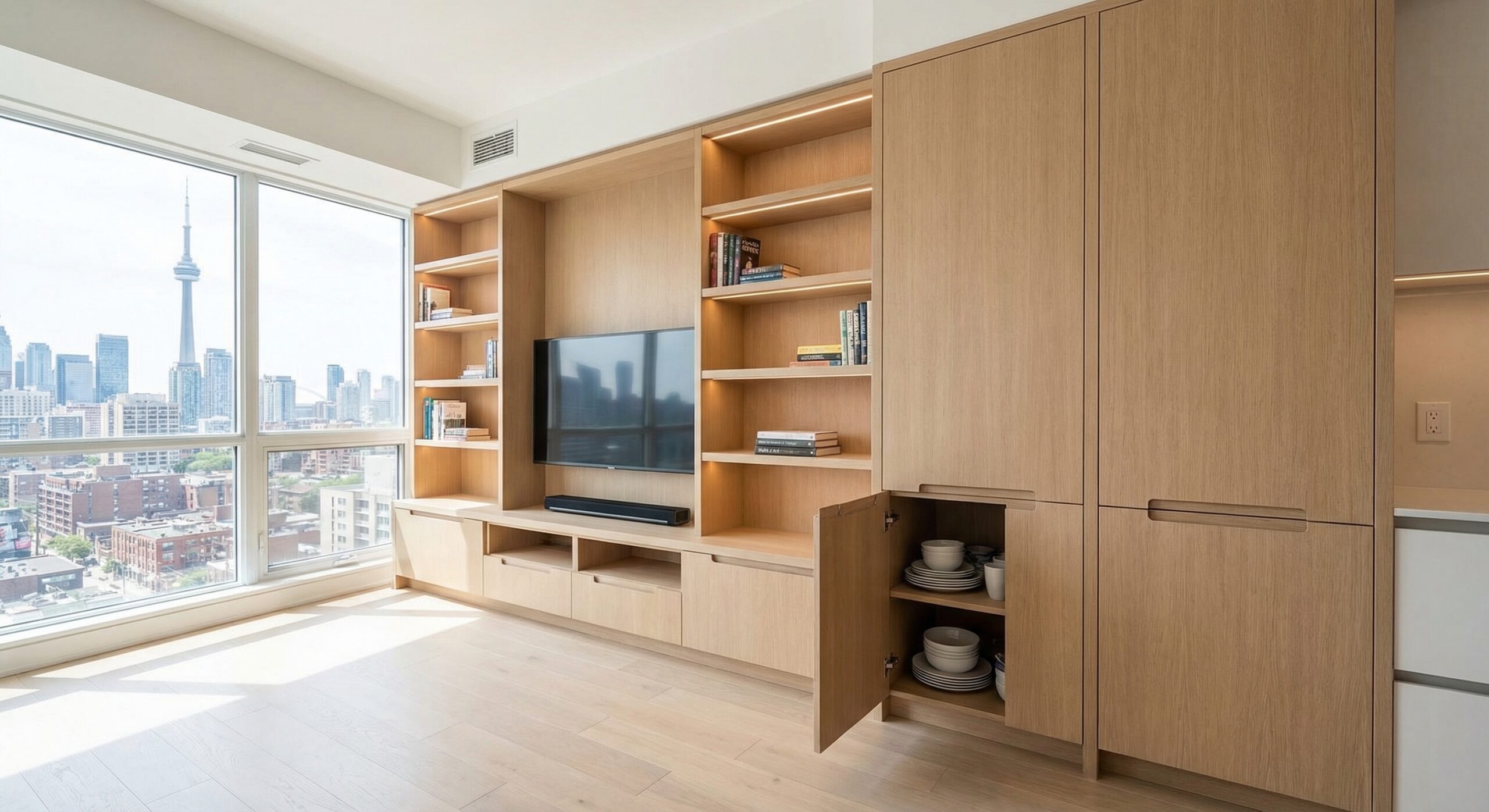
Furniture and fixtures are the details that make Toronto interiors feel finished, functional, and tailored to how you actually live or work.
At RFP Design, we design and build custom millwork for residential and commercial spaces across Toronto and the GTA, with an approach that stays practical about condo constraints, tight schedules, and the reality of day-to-day wear.
If you already know you want built-ins, wall paneling, or high-end cabinetry, this guide walks you through how to plan it well, choose materials wisely, and avoid the common mistakes that slow projects down.
Custom Millwork for Toronto Residential and Commercial Interiors
Toronto clients often come to millwork for one of two reasons. They either need storage without making the space feel smaller, or they need a polished, brand-right interior where every surface reads intentional.
Either way, well-designed furniture and fixtures improve flow, reduce visual clutter, and help a space perform. In a downtown condo, that can mean a seamless entry wall with closed storage. In a commercial space, it can mean a service counter, back bar, and display elements that support staff workflow while looking consistent with the design concept.
Bespoke Storage Solutions for Urban Living
Toronto homes and condos rarely have “extra” square footage, which makes millwork one of the cleanest ways to add capacity without adding bulk.
Maximizing available square footage in downtown condos
In compact layouts, every inch matters. Built-ins can take advantage of wall spans, awkward corners, and ceiling height that standard furniture can’t touch.
- Full-height cabinetry that uses vertical space without widening walk paths
- Integrated entry benches and shoe storage that replace freestanding pieces
- Media walls designed around real equipment sizes and ventilation needs
When furniture and fixtures are measured to the millimetre, you avoid filler panels, gaps, and wasted voids that show up when you try to “make standard pieces work.”
Integrating hidden storage into minimalist architectural designs
Minimal spaces still need storage, and Toronto clients often want it to disappear. That’s where details like push-latches, finger pulls, and clean reveals help keep the architecture calm while still giving you daily usability.
- Toe-kick drawers that turn dead space into storage
- Flush panels that conceal utility zones or clutter-prone areas
- Hidden charging stations for phones, tablets, and small electronics
If you’re balancing a minimalist aesthetic with real life, furniture and fixtures should feel quiet visually while working hard behind the scenes.
Creating multi-functional built-ins for home offices and living rooms
Hybrid rooms are common in Toronto, especially where a guest room also needs to function as an office. Multi-functional millwork keeps the room flexible without looking temporary.
- Built-in desks with closed uppers for files and printers
- Living room built-ins that combine media, books, and concealed storage
- Modular shelving layouts that can evolve as needs change
Material Selection and Craftsmanship Standards
Material choice decides how millwork ages. It affects durability, how easily surfaces can be refinished, and how the piece looks under warm residential lighting or bright commercial lighting.
Sourcing sustainable hardwoods and premium veneers for durability
For many Toronto projects, premium veneers and engineered cores provide stability while still giving you the look of real wood. Hardwood, used strategically, brings impact where it matters most, such as doors, edges, and high-touch areas.
If you’re comparing options, it helps to consider how the furniture and fixtures will be used. A condo entry built-in takes different abuse than a restaurant back bar, and materials should match that reality.
Applying hand-rubbed finishes that highlight natural wood grains
Finish is where craftsmanship becomes obvious. A hand-finished surface can bring out depth in the grain, create a richer tone, and reduce the “flat” look that shows up under certain lighting.
- Stains that are tested and adjusted to suit the wood species and veneer cut
- Clear coats selected for the right sheen level and durability
- Finish samples reviewed in the project’s lighting conditions when possible
When furniture and fixtures are designed to match existing flooring or trim, a thoughtful finishing process is what makes new work blend in rather than stand out.
Utilizing high-end soft-close hardware for seamless functionality
Hardware shapes the day-to-day experience. Soft-close hinges, quality drawer slides, and well-chosen pulls make millwork feel smooth and quiet, especially in condos where sound carries.
On commercial projects, durable hardware also supports reliability under heavy traffic and frequent use. Your furniture and fixtures should still feel consistent after thousands of open-and-close cycles.
The Design and Installation Timeline
Custom millwork works best when the timeline is clear and the approvals are structured. That keeps design intent intact while protecting the schedule.
Developing precise 3D renderings during the consultation phase
Renderings help you make decisions early, when changes are easy. They also reduce surprises once fabrication starts.
- Layout options for storage, reveals, and door/drawer configuration
- Material and finish direction aligned with the wider interior palette
- Early attention to lighting integration, power, and device clearances
This stage is also where furniture and fixtures get coordinated with adjacent trades, such as electricians or tile installers, so you don’t end up with last-minute compromises.
Coordinating on-site measurements to ensure an exact fit
On-site measurements are where a custom project becomes truly custom. Toronto buildings can have out-of-plumb walls, uneven floors, and structural constraints that aren’t obvious from drawings alone.
Accurate site verification protects your furniture and fixtures from fit issues, awkward shims, and visible gaps at install.
Managing white-glove delivery and professional installation across the GTA
Installation quality affects how millwork looks and how it performs over time. A professional install team protects finished surfaces, handles levelling and alignment, and leaves the site clean.
For condo installs, coordination matters even more. Elevator bookings, loading access, and building rules can decide whether furniture and fixtures go in smoothly or turn into a multi-day disruption.
Working with Local Artisans in Ontario
Local fabrication supports speed, accountability, and better coordination when details need to be confirmed quickly.
Reducing lead times by manufacturing products locally in Toronto
When fabrication stays local, you reduce shipping risk, keep communication tighter, and make site checks easier. That matters for one-off pieces where every dimension is specific to a single wall.
Ensuring clear communication throughout the fabrication process
Custom work relies on approvals, samples, and decisions that can’t be rushed. A clear communication rhythm keeps the project moving, especially when there are multiple stakeholders, such as homeowners, designers, and building managers.
This is where furniture and fixtures stay aligned with the original design intent instead of drifting through small, untracked changes.
Providing site-specific solutions tailored to local building codes
Toronto projects sometimes require extra planning around permits and inspections, depending on what’s being altered. The City of Toronto notes that the installation of cabinetry and millwork is among examples of work that does not require a building permit, while also emphasizing that the list is not exhaustive and that judgement should be used based on the circumstances of a project.
That’s why it helps to talk early about scope. If a millwork package connects to plumbing, electrical, or other regulated work, your furniture and fixtures should be coordinated in a way that supports compliance and avoids delays. You can review the City’s guidance here: When do I need a building permit? (City of Toronto).
Project Spotlight: Chamberlain’s Pony Bar
For Chamberlain’s Pony Bar, the goal was to create a high-end hospitality space where furniture and fixtures supported service flow while delivering a distinct, vintage-leaning atmosphere.
Challenge: The project required a balance between a historic aesthetic and modern hospitality functionality, while also optimizing seating capacity in a boutique layout.
Solution: RFP Design executed a set of bespoke elements that included a front and back bar with walnut veneer and brass inlays, integrated display shelving with lighting, architectural wall and ceiling treatments, and custom banquettes designed for high-traffic durability. You can see the full project here: Chamberlain’s Pony Bar.
FAQ
How long does a custom millwork project typically take from start to finish?
The timeline varies based on complexity, though most projects move from design approval to final installation within eight to twelve weeks.
Can custom built-ins be matched to existing woodwork or flooring?
Specialized color matching and grain coordination allow new pieces to blend with your current interior elements.
Next Steps: Plan Your Furniture and Fixtures with Confidence
If you’re planning custom millwork in Toronto, it helps to start with a clear understanding of what counts as movable furniture versus built-in fixtures, especially when you’re budgeting and coordinating trades. This guide can help you think it through: Fixture vs Furniture: Key Differences & Their Impact.
If you’re comparing options and want a practical sense of budget ranges before you commit to design, this cost breakdown is also useful: How Much Does Custom Millwork Cost?.
When you’re ready to discuss scope, timeline, and the right approach for your space, share a few details and we’ll take it from there. Contact RFP Design.