
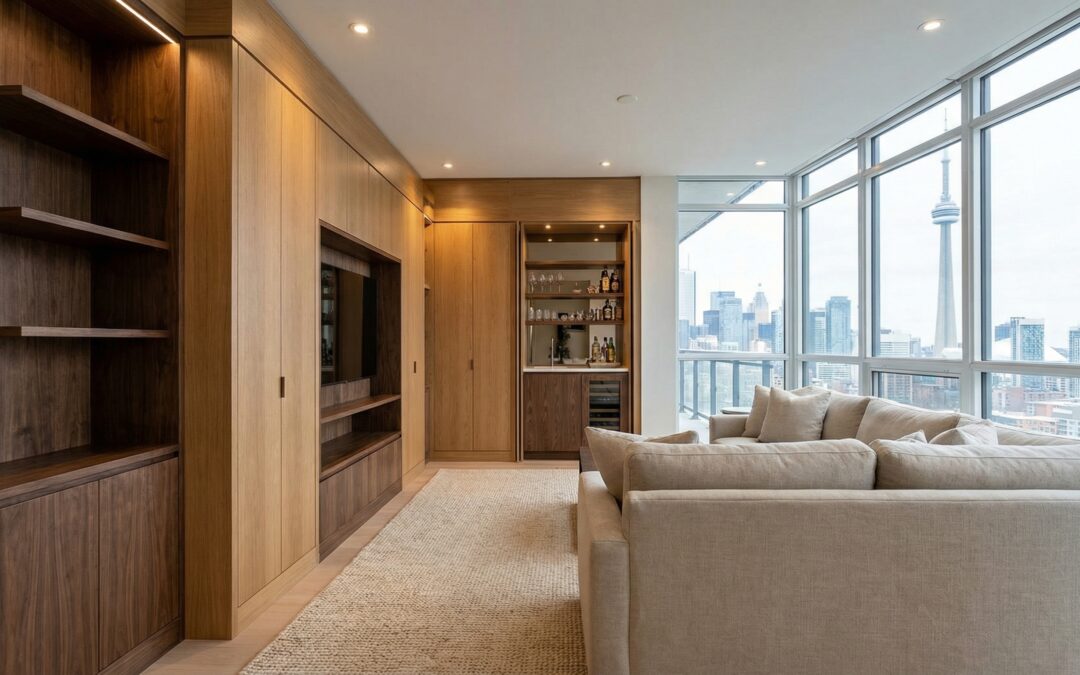
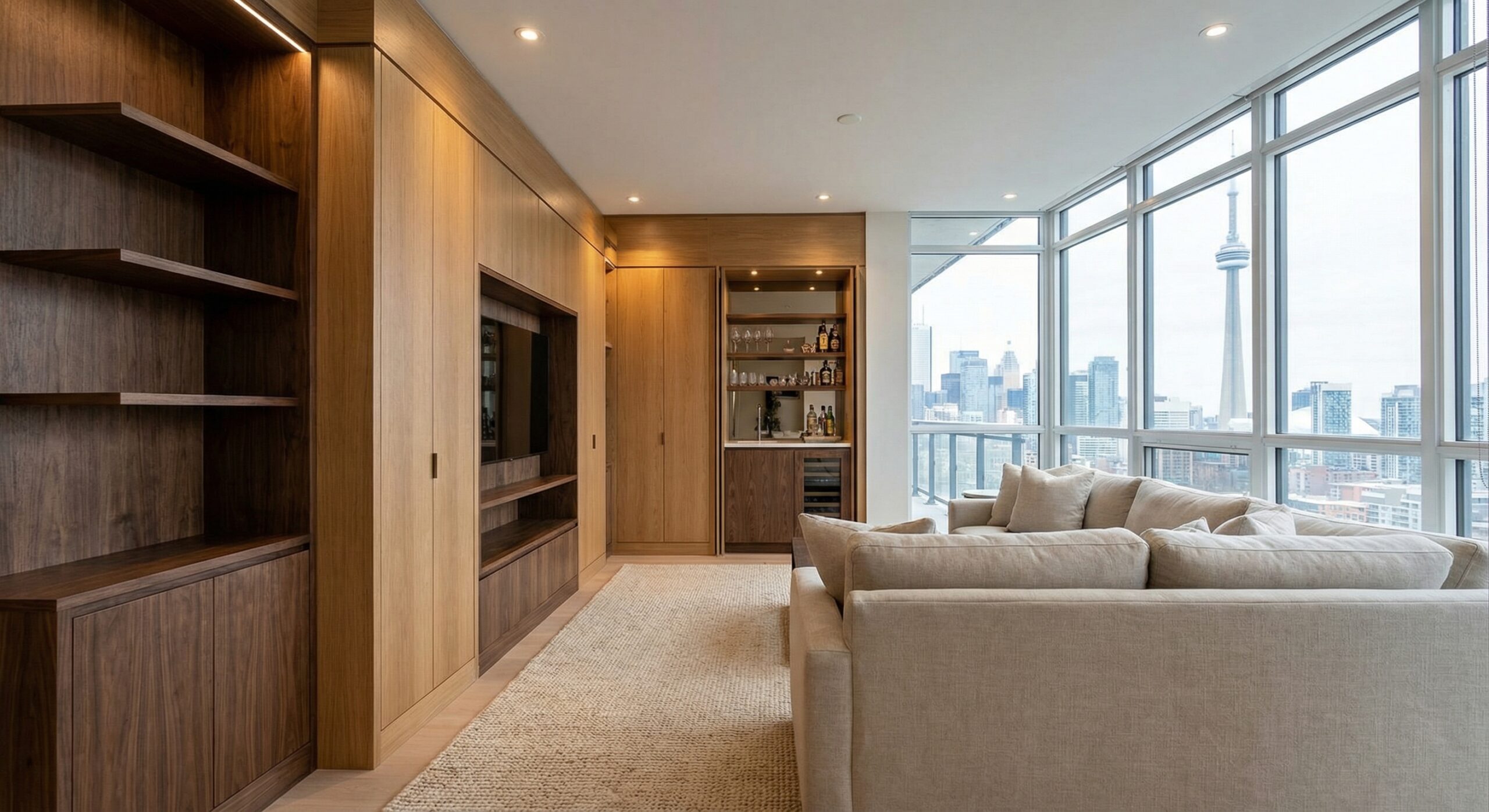
Millwork design is one of the fastest ways to make a Toronto property feel intentional, finished, and built for daily life. At RFP Design, we create custom millwork and architectural woodworking for residential and commercial interiors across Toronto and the GTA, with a process built around accurate site measurements, shop drawings, and controlled fabrication.
Toronto homes range from century properties with detailed trim to new condos with tight tolerances, while commercial spaces often need durable, brand-aligned finishes that stand up to high traffic. Strong millwork design solves both, since every detail is developed for the exact site conditions rather than “close enough” dimensions.
If you want a deeper primer before you start planning, our guide to what custom millwork is explains where architectural millwork fits within a larger renovation or build.
Precision Craftsmanship for Residential and Commercial Interiors
Toronto’s architecture asks for flexibility, since the same week can include a tight downtown condo, a midtown semi with uneven plaster, and a commercial buildout with strict coordination requirements. Our approach to millwork design starts with site realities, then moves into fabrication details that keep everything clean at install.
- Our team develops custom cabinetry and trim work that fits the specific dimensions of Toronto’s diverse architectural styles.
- We prioritize traditional joinery methods so each component holds its shape and strength over time, especially on doors, drawers, and high-use panels.
- Local fabrication in our GTA facility allows for direct oversight and consistent quality checks during the build process.
When a project leans commercial, details like service access, wear surfaces, and hardware cycles matter as much as aesthetics. You can see how we think about that side of the work in custom commercial millwork in Toronto.
Selecting Wood Species for the Ontario Climate
Ontario’s seasonal humidity swings affect wood movement, and that movement shows up as sticking doors, misaligned reveals, and cracked finishes when the build isn’t designed for it. Good millwork design accounts for expansion and contraction through material selection, construction method, and finishing schedule.
- Material selection often focuses on hardwoods such as white oak and walnut, since they perform well for furniture-grade applications while keeping a consistent look.
- We apply specialized finishes that protect the wood surface while keeping the grain readable and the colour controlled across large runs.
- Sourcing involves working with local suppliers to find premium lumber that meets environmental standards, including FSC-certified options when the project calls for it.
Wood is hygroscopic, which means it exchanges moisture with the surrounding air and moves as indoor conditions change. The Canadian Wood Council describes how wood reaches an equilibrium moisture content (EMC) and shrinks or swells below the fibre saturation point, which is why interior humidity control and proper detailing matter for long-term performance. (Canadian Wood Council: Moisture and Wood)
If you’re weighing solid wood, veneer, and engineered substrates for a kitchen, built-in, or wall panel feature, our breakdown of solid vs laminate vs veneer helps clarify what each option does well.
Tailored Storage for Modern Urban Living
Downtown Toronto living often includes limited square footage, awkward structural elements, and the need to store more than the floor plan suggests. Strong millwork design turns dead corners and blank walls into useful storage while keeping the room calm and uncluttered.
- Custom built-ins provide efficient storage solutions for downtown condos where space comes at a premium.
- Integrated designs incorporate features like hidden panels and soft-close hardware for a streamlined appearance.
- Every project begins with a detailed measurement phase so cabinetry aligns cleanly with existing walls, flooring, and ceiling conditions.
In practice, that might mean a mudroom wall that hides seasonal gear, a media unit with ventilation for electronics, or a bedroom built-in that replaces freestanding dressers. When the storage is planned at the millwork stage, the room reads larger and the circulation stays clear, which is a key goal of thoughtful millwork design.
The Collaborative Process from Design to Installation
Millwork succeeds when the design, engineering, fabrication, and installation teams stay aligned from the start. Our millwork design process is built to coordinate with architects, designers, builders, and homeowners without losing control of details like reveals, profiles, and finish transitions.
- Our designers work alongside architects and homeowners to translate conceptual sketches into technical shop drawings.
- Professional installation teams manage the final setup so joints, seams, and scribe lines land cleanly on-site.
- Clear communication throughout the production schedule helps keep large-scale renovations on track.
If you want to understand how this fits into the larger RFP workflow, the RFP process outlines how we move from early planning through production and install.
Project Spotlight: Blue Bovine Steak + Sushi House (Union Station, Toronto)
For a clear example of commercial millwork design under real site constraints, take a look at Blue Bovine Steak + Sushi House at Union Station in Toronto. The venue needed a premium, modern steakhouse feel while staying durable enough for a high-traffic environment inside a landmark building.
Challenge involved integrating modern millwork within Union Station’s existing architectural framework, sourcing premium materials on a tight timeline, and building for long-term durability in a busy restaurant setting. The project page notes specific requirements around high-quality Red Oak veneer, bronze finishes, and stone, paired with the realities of a heritage building and constant daily wear.
Solution came through CNC precision-cutting and adaptive installation techniques to coordinate with existing conditions, along with material and finish strategies built for heavy use. The execution included a cocktail and whiskey bar with fluted leather paneling, quartzite countertops, and LED-integrated shelving, plus service stations with concealed storage and reinforced coatings intended for resilience.
Frequently Asked Questions
What is the expected timeline for a custom millwork project in Toronto?
Most projects require a lead time of eight to twelve weeks, accounting for design, material procurement, shop fabrication, finishing, and installation scheduling. Timelines shift based on complexity, approval cycles, and site readiness, so we confirm a realistic production schedule during the millwork design phase.
Do you provide on-site installation for your cabinetry and trim?
Yes. Our specialized installers handle delivery and on-site installation so the woodwork fits the unique nuances of your space, including out-of-plumb walls, uneven floors, and existing architectural details common in Toronto properties.
Can you match new millwork to existing historical trim in older Toronto homes?
Yes. We frequently create custom knife profiles to replicate original baseboards and casings found in heritage properties, then tune reveals and paint transitions so the new work sits naturally beside the existing trim. That level of matching is a core part of detailed millwork design.
Ready to Plan Your Custom Millwork?
If you’re planning a renovation, a condo upgrade, or a commercial interior in Toronto and want millwork design that fits precisely and installs cleanly, we can help you scope the right approach. Share your drawings, inspiration images, and timeline, and we’ll guide you through materials, detailing, and next steps.