
Custom millwork toronto projects tend to start with a simple goal, then quickly become a question of fit, finish, and long-term performance. In a city where condos squeeze every inch, heritage homes demand restraint, and hospitality spaces take daily wear, millwork has to look sharp and hold up.
At RFP Design, we build high-end architectural millwork for Toronto-area residential and commercial interiors, with a process that keeps designers, owners, and contractors aligned from the first measure to final install. If you already have drawings, we can fabricate and install. If you are still shaping the concept, we can help you refine details so the end result looks intentional, not improvised.
If you want a quick overview of what qualifies as millwork and where it fits in an interior package, start here: https://rfpdesign.com/what-is-custom-millwork/.
Crafting Tailored Woodwork for Local Residential and Commercial Projects
Good custom millwork toronto work respects the building you are working with. That means planning around plumbing stacks, odd corners, bulkheads, existing electrical, and the realities of site conditions that rarely match a perfect rendering.
Integrating functional storage solutions into existing floor plans
Built-ins can solve issues that free-standing furniture usually cannot. We often design millwork to clear door swings, keep walkways comfortable, and still deliver serious storage capacity.
- Condo and loft storage that uses full-height cabinetry, integrated wardrobes, and clean toe-kick details.
- Living room media walls that hide cables, ventilation, and equipment while keeping proportions calm.
- Back-of-house service stations for restaurants that improve flow and reduce visible clutter.
Selecting premium hardwoods and veneers suited for the Ontario climate
Toronto interiors cycle through heating season and humid summers, so we build with movement in mind. For custom millwork toronto projects, that often means pairing the right substrates and veneer layups with stable construction details, then finishing in a way that resists seasonal stress.
If you are comparing options like solid wood, veneer, and laminates, this internal guide helps clarify where each one makes sense: https://rfpdesign.com/blog/the-basics-of-wood-materials-solid-vs-laminate-vs-veneer/.
Creating focal points for living areas and retail storefronts
Millwork can anchor a space without making it feel heavy. In residential settings, that can be a fireplace surround with integrated storage or a kitchen feature wall. In retail and hospitality, focal millwork often carries the brand through texture, lighting, and precision detailing.
For teams designing millwork-led environments in food service, our restaurant-specific capabilities are outlined here: https://rfpdesign.com/architectural-millwork/custom-restaurant-millwork/.
Material Selection and Sustainability Standards
Premium millwork should feel good to live with, not only good to photograph. Material choices affect durability, maintenance, and indoor air quality, especially in tight Toronto interiors where fresh-air exchange can be limited.
Working with sustainable timber sourced through local suppliers
We aim to source responsibly through established supply chains and specify materials that fit the performance requirements of the space. When a project targets a sustainability framework, we can align specifications with the documentation needs you have, including chain-of-custody expectations when applicable.
Finishing techniques that protect wood from seasonal humidity shifts
Seasonal movement is normal. The difference between millwork that ages well and millwork that looks tired in two years often comes down to how it is built and finished.
- Finish sampling to confirm sheen, tone, and clarity under the project’s lighting.
- Edge detailing and proper sealing at vulnerable points like sink bases, service stations, and bar fronts.
- Commercial-grade clear coats in hospitality environments to handle abrasion and frequent cleaning.
Using low-VOC adhesives and coatings for indoor air quality
Low-emission products matter for occupant comfort and for projects that track indoor environmental quality requirements. In Canada, architectural coatings and VOC limits are regulated at the federal level, with defined VOC concentration limits by coating category. You can review an overview of Canada’s VOC concentration limits for architectural coatings here: https://www.canada.ca/en/environment-climate-change/services/managing-pollution/sources-industry/volatile-organic-compounds-consumer-commercial/architectural-coatings.html.
For custom millwork toronto projects, we coordinate adhesives, coatings, and installation sequencing so the space can be turned over cleanly, with clear expectations around curing time and site protection.
The Professional Design and Fabrication Workflow
High-end millwork succeeds when the workflow prevents surprises. The goal is simple: confirm measurements, confirm intent, then fabricate with enough clarity that the install team can execute efficiently on site.
Initial site measurements and conceptual sketching for accuracy
We start by verifying site conditions and identifying constraints early. For renovations, this can include wall irregularities, ceiling variations, and conflicts with existing MEP.
Clear measurement and scope alignment keeps custom millwork toronto projects from drifting into delays, change orders, and compromises during installation.
Detailed 3D modeling to visualize the final result before cutting
3D modeling supports decision-making when details matter, including reveals, integrated lighting pockets, hardware clearances, and transitions between materials. It also helps teams coordinate millwork with flooring, stone, tile, and adjacent trades.
Precise shop drawings that guide the installation phase
Shop drawings translate design intent into buildable instructions, including dimensions, materials, hardware, and installation notes. Once approved, they become the reference point for fabrication and the roadmap for a clean, predictable install.
Project Spotlight: Blue Bovine Steak + Sushi House (Union Station, Toronto)
One strong example of custom millwork toronto work in a high-traffic setting is https://rfpdesign.com/project/blue-bovine/.
Challenge: The venue needed a bespoke interior that read as luxurious while functioning smoothly inside one of Toronto’s busiest destinations. The space required millwork and architectural features that could take daily wear, maintain visual consistency, and support service flow.
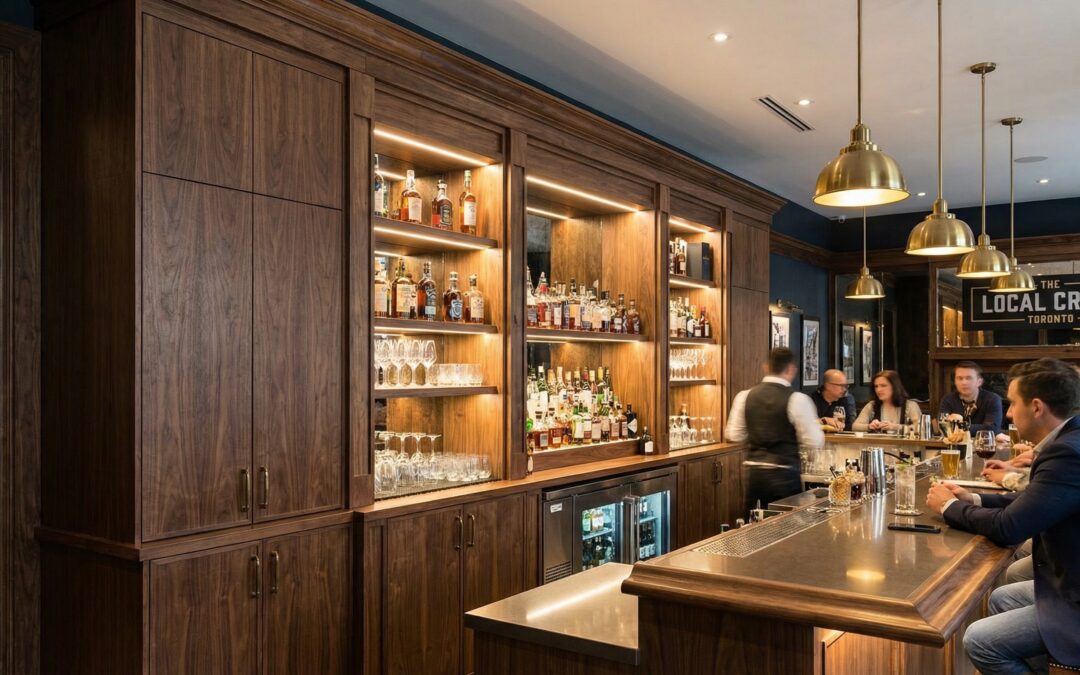
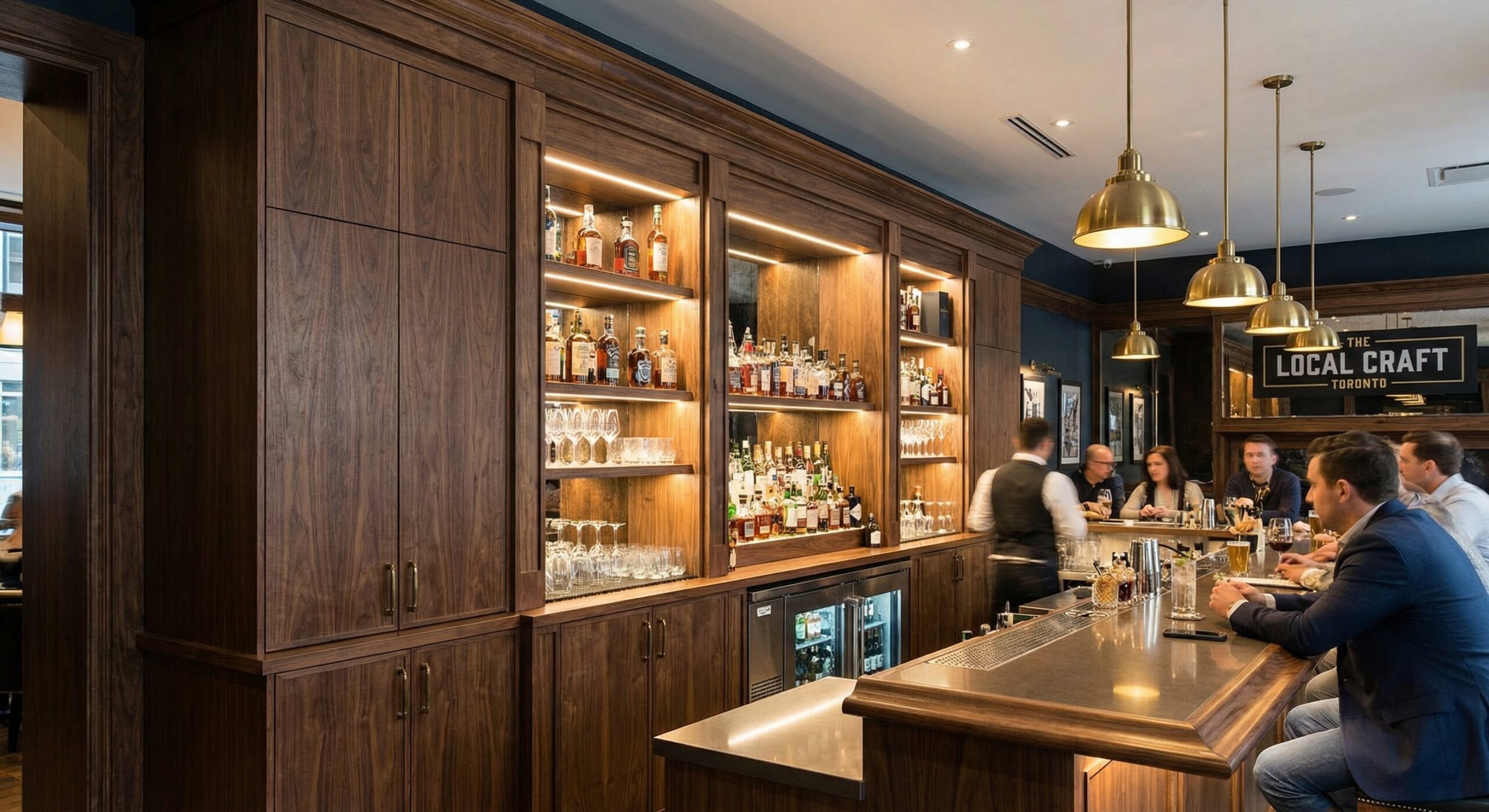
Solution: RFP Design Group delivered custom fabrication and installation for key elements such as bar features with integrated shelving and lighting, service stations with concealed storage, and architectural components that enhance depth and ambiance. The approach balanced premium materials and detailed craftsmanship with practical durability for hospitality operations.
Enhancing Property Value Through Custom Carpentry
Owners usually feel the value of millwork in everyday use first, then see the value show up in the way the property presents to buyers, tenants, and guests. In Toronto, where finishes are compared quickly, quality millwork supports a clear difference in perceived build standard.
Replacing mass-produced fixtures with durable handcrafted elements
When you swap generic casework for well-built millwork, doors close properly, edges stay crisp, and the space holds its look under daily use. For custom millwork toronto hospitality and retail environments, that durability also reduces maintenance and refresh cycles.
Optimizing usable square footage with built-in shelving and cabinetry
Built-ins can recover space that would otherwise be wasted, especially around structural columns, awkward corners, and shallow wall runs. This matters in compact condos, narrow semis, and storefronts where merchandising and storage compete for the same footprint.
Maintaining architectural consistency in historic Toronto homes
For older homes, millwork needs a steady hand. Profiles, proportions, and paint or stain matching all affect whether new work feels like it belongs. We can also coordinate modern functional requirements, such as integrated storage and lighting, while keeping the overall language consistent with the home.
FAQ: Custom Millwork in Toronto
What is the typical timeline for a millwork project in Toronto?
Most projects take between eight and twelve weeks depending on the scale and material availability. For custom millwork toronto scopes tied to construction schedules, we recommend confirming lead times during early design so approvals and procurement do not get squeezed later.
Do you provide installation services for the finished pieces?
The team handles the entire process including the final on-site assembly to ensure a perfect fit. That continuity matters for custom millwork toronto work because tight reveals and clean transitions depend on installation technique as much as fabrication.
How do humidity levels in Ontario affect custom woodwork?
Properly seasoned wood and specific finishing techniques help prevent warping or cracking during seasonal transitions. We also plan joinery and tolerances so the millwork can move naturally without telegraphing gaps or stress lines.
Ready to Plan Your Custom Millwork?
If you are scoping custom millwork toronto for a residence, restaurant, retail buildout, or workplace, we can help you define materials, details, and a fabrication timeline that fits the wider project schedule. Share drawings, inspiration, or a rough scope and we will guide the next steps.