
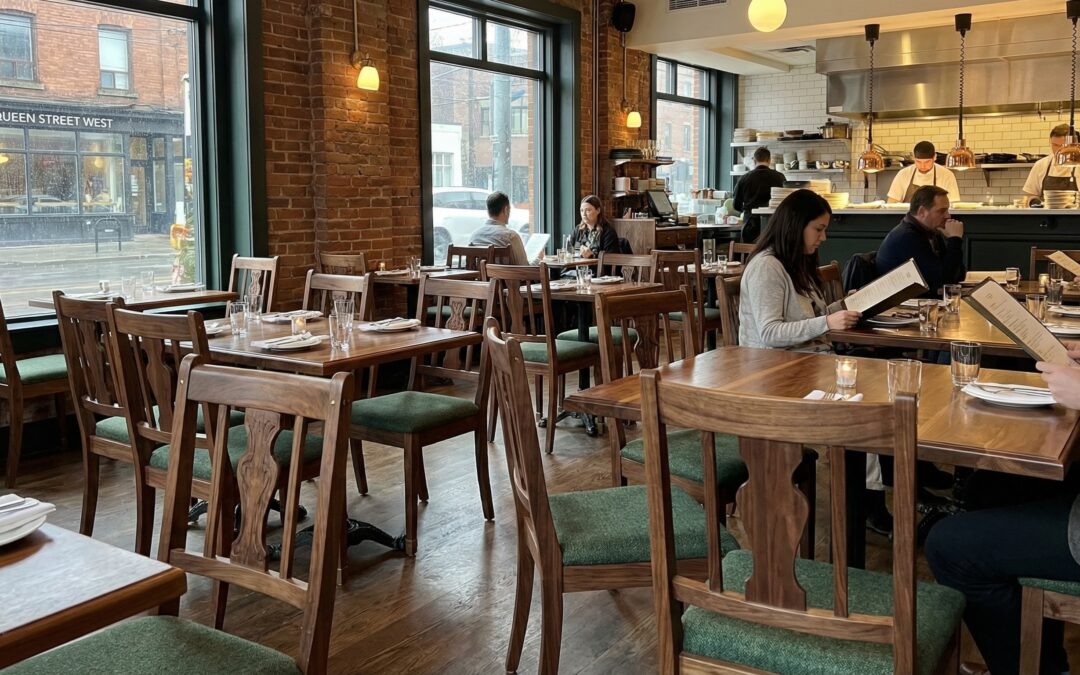

Custom restaurant chairs are one of the fastest ways to make a Toronto dining room feel intentional, comfortable, and built for the pace of real service.
Chairs sit at the intersection of guest experience, staff flow, and long-term maintenance. When the seating is designed for your layout and fabricated for commercial wear, it shows in how the room photographs, how it sounds during peak hours, and how often you have to repair or replace pieces.
If you’re comparing off-the-shelf options with custom restaurant chairs, this guide breaks down what matters in the real world, from materials and finishes to spacing, ergonomics, and project workflow.
Why Custom Restaurant Chairs Matter in Toronto
Toronto restaurants deal with tight footprints, busy weekends, and constant turnover on seats. That’s why custom restaurant chairs tend to perform best when they’re designed around your actual room, not a generic spec sheet.
- Brand consistency: Matching chair profiles, upholstery, and finishes to the rest of your millwork helps your space feel cohesive.
- Operational fit: Chair width, weight, and glide choice affect how quickly staff can reset tables and how much wear your floors take.
- Durability planning: When frames, joinery, reinforcement, and finish systems are chosen for high-traffic use, you avoid the “wobble cycle” that hits many imported chairs after a short period.
Most teams come to custom seating because the room is unique, the concept is specific, or the existing furniture has become a maintenance problem.
Designing Custom Restaurant Chairs for Real-World Service
Comfort and longevity come from decisions you can validate early, before production starts. With custom restaurant chairs, you can dial in proportions that support the guest experience and the realities of table spacing.
Ergonomics and spacing that supports revenue
Dining chairs usually land around an 18-inch seat height for standard dining tables, and spacing between chairs often lands in the 24–30 inch range depending on the layout and traffic paths. Those aren’t style choices; they control how comfortably guests sit and how smoothly staff can move. ([alibaba.com](https://www.alibaba.com/product-insights/wooden-restaurant-chairs-wood.html?utm_source=openai))
- Seat height and depth: If the chair sits too high or too deep, guests shift around and linger uncomfortably.
- Back angle and support: You can tune the feel for quick-turn casual dining or longer, lounge-like service.
- Footprint planning: A slightly narrower chair can save meaningful inches across a banquette run or along a tight aisle.
When you build custom restaurant chairs, you can prototype or mock up key dimensions, then lock them in before you commit to a full run.
Material Selection and Finishing Options
Material choices determine how your chairs look after a year of service, not just on opening night. For custom restaurant chairs, the smartest approach is to decide on structure first, then specify surfaces that can be maintained.
- Hardwoods and veneers: Oak, walnut, and maple are common choices when you want warmth and long-term refinish potential.
- Metal reinforcement: Hidden steel elements can increase stiffness and reduce frame movement under heavy daily use.
- Performance upholstery: Commercial vinyls and performance fabrics simplify wipe-downs and reduce staining in high-turn environments.
RFP Design Group’s custom restaurant furniture work frequently blends wood, metal, and upholstery so the seating matches the concept while staying functional for service demands. ([rfpdesign.com](https://rfpdesign.com/custom-furniture/custom-restaurant-furniture/))
Finishes that hold up in busy dining rooms
Chairs fail early when finish systems aren’t chosen for moisture, cleaning chemicals, and repetitive abrasion at touchpoints. Planning your finish schedule helps your custom restaurant chairs keep their color and sheen while avoiding sticky buildup or premature wear.
- Moisture-resistant coatings: Helpful near entrances, bar zones, and high-spill areas.
- Repair strategy: A finish that can be touched up matters when you have dozens of units.
- Color consistency: Stain matching across wood species and batches keeps the room from looking pieced together.
Integrated Features for Modern Restaurant Seating
With custom restaurant chairs, you can build in details that solve daily annoyances for operators and guests while keeping the aesthetic clean.
- Brass or metal footrests: Especially useful for bar stools where foot contact wears finishes quickly.
- Floor protection: Glides selected for your flooring reduce scratching and noise.
- Stacking or handling considerations: If your team moves seating often for events, weight and grip points matter.
Well-chosen details reduce replacements, cut repair time, and keep the room looking consistent in photos and in person.
Project Spotlight: Runway 84
In the Runway 84 project, the client needed a luxury look that could handle high-traffic hospitality use. RFP Design Group delivered a full seating package that included custom banquettes, bar stools, and dining chairs designed to match the restaurant’s refined aesthetic while holding up to constant service. ([rfpdesign.com](https://rfpdesign.com/project/runway-84/))
The challenge centered on durability without losing the upscale feel. The solution combined stain-resistant upholstery, reinforced solid wood frames, and added metal reinforcement in key seating elements, then carried the palette through the space so the furniture read as a unified set. ([rfpdesign.com](https://rfpdesign.com/project/runway-84/))
If you’re planning custom restaurant chairs and want them to look sharp after thousands of guest cycles, this case study is a useful benchmark for how materials and construction details get specified for real hospitality wear.
The Collaborative Design and Installation Process
Custom seating works best when the process is structured, especially when you have opening dates, landlord requirements, and multiple trades on site. For custom restaurant chairs, you want clear checkpoints before fabrication begins.
- Step 1: Site and concept review to confirm clearances, table heights, aisle widths, and service style.
- Step 2: Design development, material sampling, and confirming the finish direction.
- Step 3: Mockups when needed, then fabrication and finishing.
- Step 4: Delivery coordination and placement planning so install day stays controlled.
If you’re also doing millwork and built-ins at the same time, it helps to align furniture details with architectural elements. This is where a single partner can reduce coordination friction. For related planning, see Restaurant Interior Design. ([rfpdesign.com](https://rfpdesign.com/blog/restaurant-interior-design/))
Standards and Specs That Help Chairs Last
When operators ask how to judge durability, performance standards give a practical baseline. The ANSI/BIFMA X5.4 standard covers public and lounge seating used in settings that include restaurant and dining environments. ([bifma.org](https://www.bifma.org/news/700889/ANSIBIFMA-X5.4-2020-R2025-Public-and-Lounge-Seating-Standard-Reaffirmed.htm?utm_source=openai))
In practice, you can use this as a reference point when discussing testing expectations, reinforcement strategies, and long-term maintenance planning for custom restaurant chairs.
FAQ
How long does it take to install custom restaurant chairs?
Timelines depend on quantity, finish complexity, and whether you’re approving a prototype. Many projects run several weeks for design and fabrication, followed by coordinated delivery and placement once the space is ready.
Can custom restaurant chairs match our existing millwork and brand finishes?
Yes. With custom restaurant chairs, you can match stain direction, sheen level, metal tone, and upholstery color so the seating aligns with your bar, banquettes, and wall details.
What materials are best for high-traffic restaurant seating?
Solid wood frames with reinforcement where needed, paired with performance upholstery and commercial-grade finishes, tend to hold up well under heavy service. Material selection should also reflect your cleaning routine and the type of spills you expect.
Planning a Seating Package in Toronto
If you’re planning custom restaurant chairs as part of a broader build-out, it helps to coordinate the seating with your overall millwork strategy. For more context on custom fabrication, you can also read The benefits of working with RFP on custom wood projects.
When you’re ready to discuss quantities, finishes, and timelines, share your drawings or inspiration and we’ll help you translate them into a buildable chair spec.