
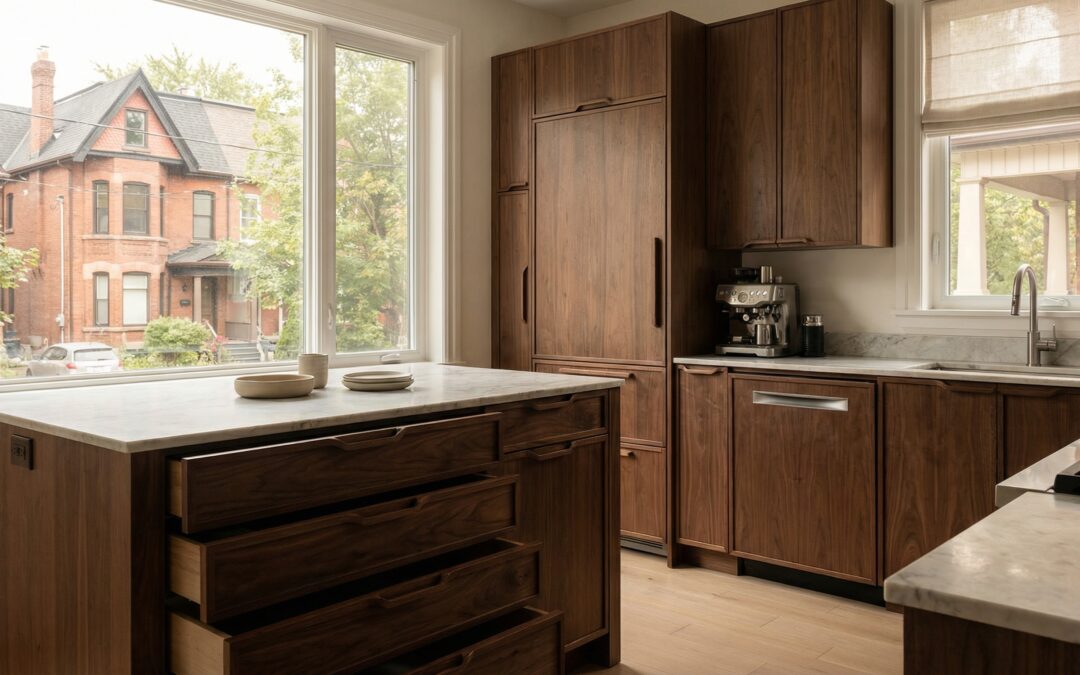
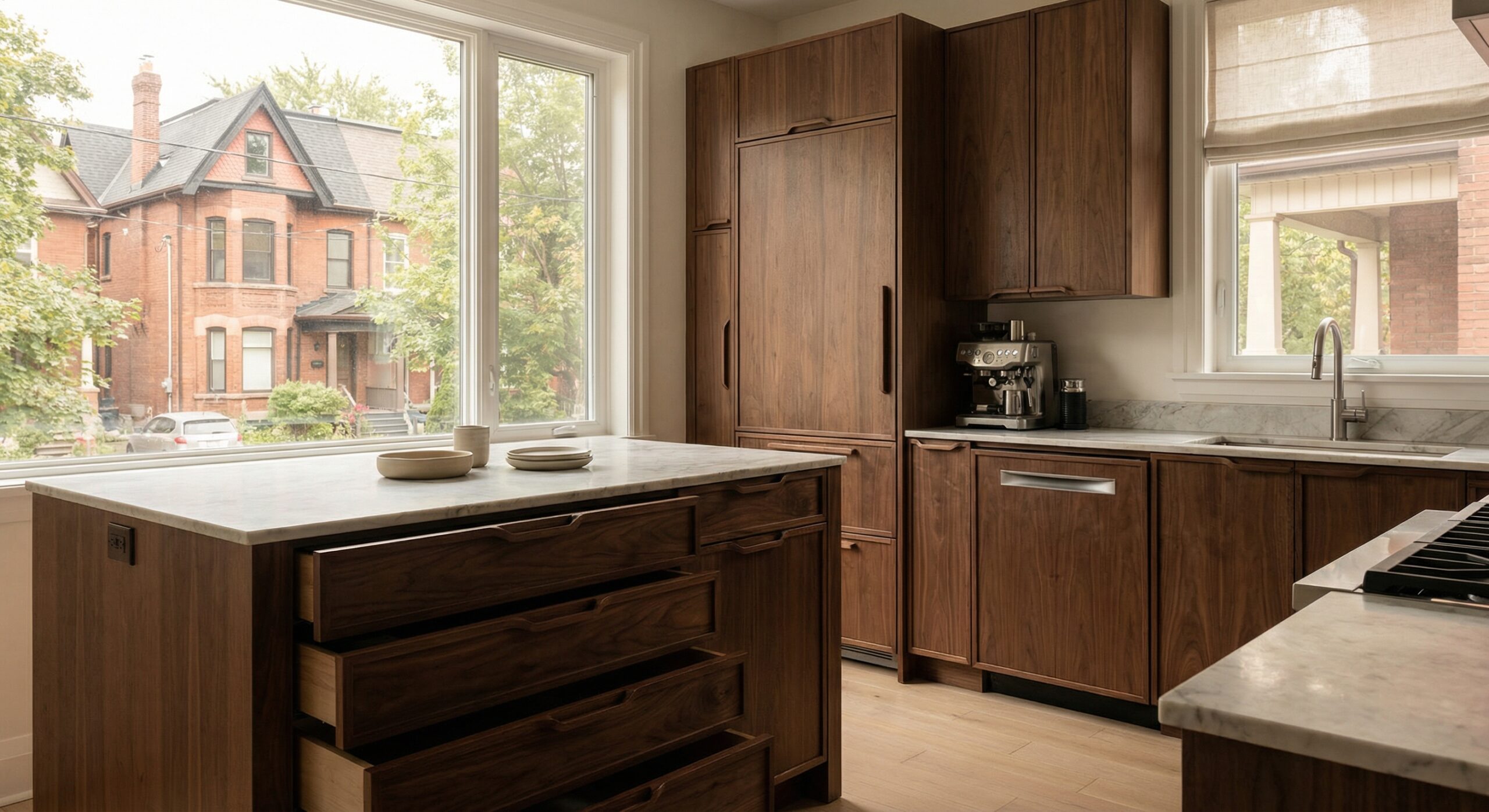
Architectural millwork is the difference between a kitchen that merely fits and a kitchen that feels intentional in a Toronto home. When your space includes tight clearances, old-house surprises, and open-concept sightlines, custom cabinetry needs to be designed and built around real conditions, not generic dimensions.
This guide walks through how premium custom kitchen cabinets are planned, fabricated, and installed for Toronto properties, with the practical details homeowners and designers care about. If you’re comparing options, it should help you understand what you’re paying for and what to ask before you approve drawings.
Tailoring Cabinetry to Specific Toronto Floor Plans
Toronto kitchens often ask for careful planning because the footprint is rarely straightforward. You might be working with a narrow downtown townhome, a condo that opens into the living area, or a heritage property with structural quirks that affect every run of cabinetry.
- Layouts that respect tight widths by using deeper planning around corners, targeted pull-outs, and storage that works in slim runs where standard boxes waste space.
- Open-concept integration so the kitchen reads as part of the main floor, with consistent panel reveals, matching finishes, and thoughtful transitions into adjacent millwork features.
- Real-world accommodation for older construction where floors may be out of level, walls may not be plumb, and framing can shift from what you’d expect in newer builds.
In practice, architectural millwork starts paying off when cabinetry is drawn around how you actually move through the space. That includes clearances at dishwashers, corner doors, seating areas, and any tight pass-throughs between the kitchen and dining zone.
Architectural millwork details that keep kitchens feeling calm
Small technical choices keep a high-end kitchen from feeling visually busy. Consistent reveals, clean filler strategies, and panel alignment across tall units matter even more when your kitchen is visible from the front door or living area.
- Matched panel widths across fridge walls and tall pantry banks
- Appliance garages or pocket-door zones to reduce countertop clutter
- End panels and finished backs designed for island seating views
Materials Selected for Longevity and Appearance
Premium custom cabinets look great on install day, then they keep earning their place after years of cooking, cleaning, and daily use. Material selection plays a big role, especially in Ontario where seasonal humidity swings can cause wood movement.
- Locally sourced hardwoods and high-grade veneers that handle daily wear well and deliver consistent grain and colour control across doors and panels.
- Specialized finishes that help resist moisture changes and surface wear, which is particularly relevant during winter heating season and humid summers.
- Integrated hardware and soft-close mechanisms that protect doors and drawers from impact, keep alignment stable, and maintain a smooth feel over time.
Wood will still respond to its environment, so a smart plan includes both good finishing and realistic expectations about seasonal change. Many building and indoor-environment guides recommend keeping indoor humidity in a healthy range, with winter often landing around 30–40% and summer staying under roughly 55%, which also helps protect wood elements inside the home. (Source)
When architectural millwork is built and finished with these conditions in mind, doors stay more stable, drawer action stays smoother, and the kitchen holds its “made for this house” look longer.
The Professional Fabrication and Installation Process
Great cabinetry is the result of a controlled process, not a last-minute site build. The goal is predictable fit, predictable reveals, and an installation that respects your floors, walls, and adjacent finishes.
- Fabrication in a dedicated facility where craftsmen can use precision machinery alongside traditional techniques for clean joinery and repeatable results.
- Detailed site measurements that reduce the risk of field fixes, help avoid gaps, and support panels sitting flush against real walls (not assumed walls).
- Experienced installers who manage leveling, scribing, and sequencing so the final result stays true to the design intent.
If you’re reviewing quotes, ask how the team handles site verification, templating around uneven conditions, and installation scheduling around other trades. That’s where architectural millwork projects stay on track.
Project Spotlight: Miller Tavern – A Fusion of Classic Elegance & Modern Craftsmanship
One clear example of how architectural millwork performs in the real world is RFP Design Group’s work at Miller Tavern in Toronto.
Challenge: The space needed to preserve a landmark feel while improving function and adding refined new features in a high-traffic hospitality environment. The project also needed installation planning that wouldn’t disrupt operations more than necessary.
Solution: RFP delivered a package that included custom front and back bar installations, integrated liquor shelving with lighting, coffered ceiling and wall paneling, custom doors and partitions, plus tailored seating and table components. The approach combined traditional woodworking techniques with updated finishes, and the work was executed with phased installation and off-site fabrication to keep the venue running.
If you’re planning a Toronto kitchen, the takeaway is simple. A careful process, accurate site measurement, and coordinated fabrication help architectural millwork land cleanly in spaces that already have constraints.
What Toronto Homeowners Should Expect From a Premium Cabinet Build
Before you sign off on drawings, it helps to align on what “premium” looks like in documentation and execution. That includes how interiors are organized, what edges and panel transitions look like, and how appliance specs are being handled.
- Shop drawings that clearly call out cabinet depths, fillers, and appliance panel requirements
- A defined finish schedule (paint, stain, sheen level) that matches the home’s lighting
- Hardware selections that fit the door style and daily use patterns
For more context on how custom woodwork fits into a broader home or commercial scope, you can also review RFP’s overview of what custom millwork is, and see how their team frames architectural millwork services.
FAQ
What is the typical timeline for a custom cabinetry project in Toronto?
Most projects require eight to twelve weeks from the initial design approval to the final day of installation.
Can custom millwork accommodate integrated appliances?
The design process includes specific measurements for refrigerators and dishwashers to create a seamless look with matching panels.
Why is local manufacturing important for Toronto homeowners?
Producing cabinets nearby allows for stricter quality control and ensures the materials are acclimated to the regional climate.
Ready to plan your Toronto kitchen cabinetry?
If you want cabinetry that fits cleanly, wears well, and feels cohesive across your main floor, RFP can help you scope the right level of architectural millwork for your kitchen. Share your plans, inspiration images, or site photos and you’ll get a clear next step.