
bespoke furniture toronto is where a high-end kitchen starts to feel truly tailored, especially when the cabinetry is designed for the way Toronto homes are actually laid out.
At RFP Design, we approach custom kitchen cabinets as architectural millwork that needs to perform every day, look sharp for years, and install cleanly in spaces that are rarely perfectly square.
If you’re planning a renovation in Toronto or the GTA, this guide breaks down how premium cabinetry gets designed, built, and installed so it feels intentional from day one and stays that way.
Material Selection for Durable Kitchen Interiors
Kitchen cabinets take more impact than most people expect. Doors get pulled fast, drawers get overloaded, and finishes get tested by heat, steam, and cleaning products. With bespoke furniture toronto projects, material decisions are where longevity gets locked in.
Hardwood choices that hold up in real kitchens
For high-end cabinet doors, drawer fronts, and visible panels, we often start with hardwoods that keep their structure and look consistent over time.
- White oak works well when you want strength, a clear grain pattern, and a finish that ages gracefully.
- Maple suits cleaner aesthetics and painted finishes, with a tight grain that reads refined up close.
- Stable, cabinet-grade cores are chosen for boxes and wide panels to reduce seasonal movement and keep reveals consistent.
If sustainability matters in your spec, chain-of-custody certification is one way to confirm wood is tracked through the supply chain. FSC explains how chain of custody verifies forest-based materials from source to finished product. Learn how FSC chain of custody works.
Finishes that stay crisp despite heavy daily use
A premium finish should look good on install day and still look good after years of wiping, splashes, and sunlight. That means the finish system needs to match the use case, not only the colour.
- For stained looks, we plan for grain behaviour and colour consistency so large runs of cabinetry don’t shift tone from one bank to the next.
- For painted cabinetry, we focus on prep, sealing, and topcoat selection so edges don’t telegraph and touchpoints don’t burnish quickly.
- For busy family kitchens, we often recommend finish options that hide fingerprints and micro-scratches rather than highlighting them.
If you’re weighing stain versus paint for cabinetry, this internal guide can help clarify how each option behaves and why the prep work matters. Shades and colours: wood staining vs. wood painting.
Hardware and hinges that feel smooth for years
High-end kitchens get judged on the small moments. A door that closes cleanly, a drawer that stays aligned, and pull-out storage that doesn’t rack under load all come down to hardware selection and installation tolerances.
- Soft-close hinges and slides should be sized to door weight and drawer depth, not chosen as a default.
- Pull-out systems need proper mounting and clearance planning so they don’t bind later.
- Consistent reveals require accurate drilling, careful hinging, and a plan for adjustment after install as the space settles.
Storage Solutions for Urban Toronto Homes
Toronto kitchens often have one constraint that drives everything else. You might have limited square footage in a condo, awkward walls in a century home, or a layout that needs to serve both cooking and entertaining. With bespoke furniture toronto cabinetry, storage is designed around how you live, then built to fit the space precisely.
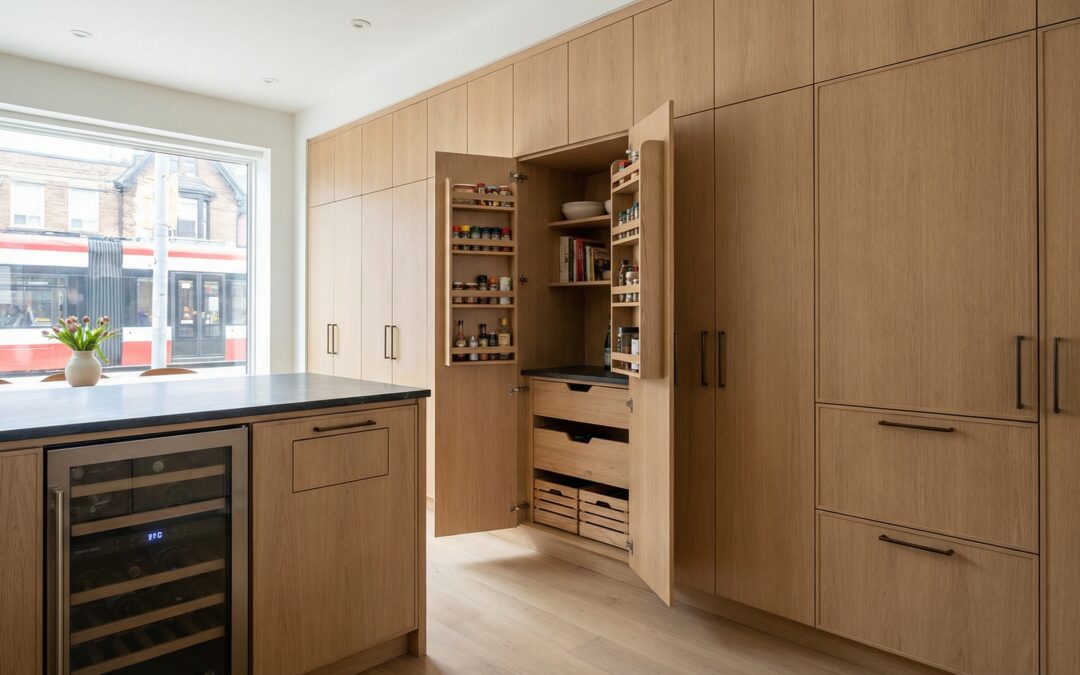
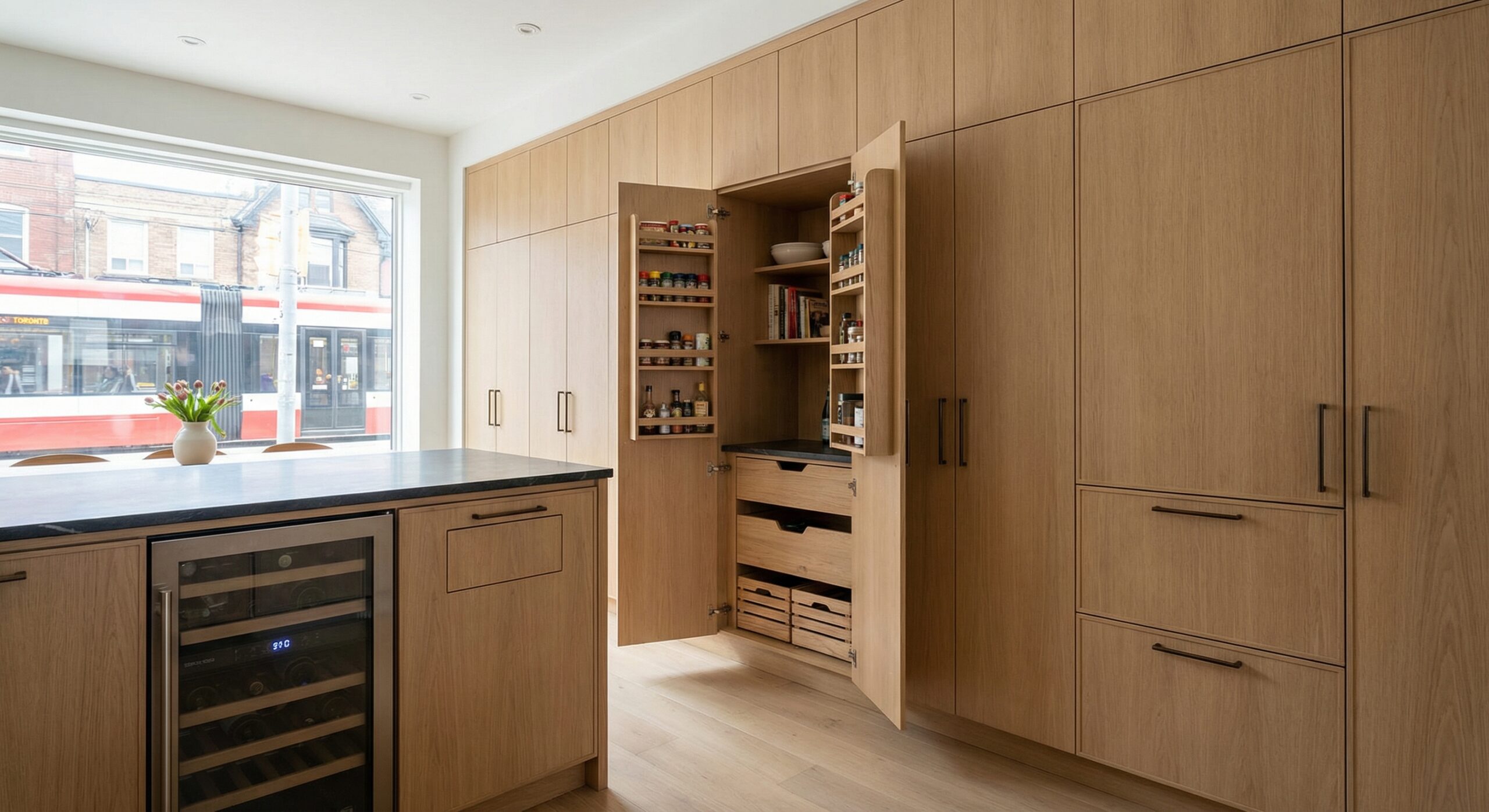
Floor-to-ceiling cabinetry that uses vertical space
In smaller kitchens, vertical storage is frequently the difference between a calm room and constant clutter. Floor-to-ceiling cabinets also create a more architectural look when the uppers land cleanly at the ceiling line.
- Upper storage can be divided into daily-use zones and seasonal zones so you aren’t constantly reaching overhead.
- Integrated panels can help conceal bulkheads, ducts, or uneven ceiling transitions that show up in older Toronto construction.
- Tall pantry runs can replace multiple smaller cabinets and simplify the visual rhythm of the room.
Specialized organizers that clear the counters
Custom organizers keep the work surface open and make the kitchen faster to use. That matters when your prep area is limited or your kitchen shares space with a dining zone.
- Spice pull-outs that keep labels visible and prevent “double buying.”
- Cutlery and utensil inserts built to match your actual drawer sizes, not generic widths.
- Waste, recycling, and compost pull-outs designed around Toronto’s day-to-day routines.
Custom islands that add prep space and seating
An island can carry a lot of weight in a Toronto kitchen. It often needs to hold storage, support prep, manage traffic flow, and still look clean when guests are over.
- We plan clearances for appliance doors, walkways, and seating so the island doesn’t create pinch points.
- We integrate outlets and charging intentionally so cords don’t end up living on the counter.
- We design seating overhangs and legroom to suit how people actually sit, not just how it looks in renderings.
For more ideas on making compact interiors feel larger and function better, this article is a useful companion when you’re planning cabinetry layouts. How to make your space look bigger.
The Fabrication and Installation Process
Design is where the vision gets set, fabrication is where it becomes real, and installation is where quality becomes obvious. A refined bespoke furniture toronto outcome depends on all three working together without shortcuts.
Precise measurements for older GTA homes
Toronto and GTA houses regularly include details that affect cabinet fit, including wavy plaster, sloped floors, and walls that drift out of square over a long run.
- We measure with the assumption that nothing is perfectly straight and confirm key reference lines before we build.
- We account for appliance specs, venting, plumbing, and electrical so cabinet layouts don’t get compromised late.
- We plan fillers and scribes strategically so they look intentional rather than like a patch.
Shop assembly and quality control before anything arrives on site
Controlled shop conditions allow tighter quality checks than a jobsite can. That includes verifying door alignment, finish consistency, and joinery fit before pieces ever go into the truck.
- Components are assembled and checked for square so gaps stay consistent on install day.
- Door and drawer functions are tested so hardware feels smooth and predictable.
- Dry-fit thinking reduces surprises when the room has tight access or tricky corners.
Installation that prioritizes seamless joints and level surfaces
Installation is where premium work can either look effortless or look rushed. We treat leveling, alignment, and finishing details as the core of the job, not the last step.
- Cabinet runs are leveled and shimmed carefully so doors hang true and drawers don’t drift open.
- Panels and fillers are scribed cleanly for tight wall connections and consistent lines.
- Final adjustments get done after everything settles so reveals and hardware alignment stay refined.
Project Spotlight: Shoji Screens – Private Residence
Not every project is a kitchen, but the craftsmanship standards carry across categories. In Shoji Screens – Private Residence, a Toronto homeowner needed architectural screens that looked minimal while integrating lighting and hidden wiring. RFP Design built clear-finished solid oak frames with traditional paper inlay and engineered backlit LED panels so the light diffused evenly and the wiring stayed concealed.
The page outlines several practical constraints that mirror what we solve in kitchen millwork too. The team managed wire routing without visible fasteners, protected delicate paper from humidity-related sagging, and hit millimeter-level tolerances for a clean fit in tight architectural conditions.
You can review the details and finishes here. Shoji Screens – Private Residence.
FAQ
How do custom cabinets differ from pre-made options?
Custom units are built to specific dimensions which allows for a perfect fit without the need for filler strips. With bespoke furniture toronto cabinetry, that also means storage, hardware, and finish choices are selected around your kitchen’s constraints rather than a standard box size.
What is the typical lead time for cabinetry in Toronto?
Most projects require eight to twelve weeks from the final design approval to the start of installation. Timelines can shift based on finish complexity, material availability, and site readiness, so we confirm schedule milestones during design sign-off.
Can custom cabinetry increase property value?
High-quality millwork improves the functional utility of a home and often appeals to buyers looking for durability. When the kitchen feels built-in, balanced, and easy to live with, it tends to read as a meaningful upgrade rather than a cosmetic change.
Planning a Toronto Kitchen That Feels Built-In
If you’re investing in bespoke furniture toronto cabinetry, the best results come from decisions that connect the materials, storage planning, and install approach into one clear plan. That’s how you end up with doors that stay aligned, finishes that keep their look, and storage that reduces visual noise every day.
To talk through a custom kitchen cabinet scope in Toronto or the GTA, reach out here. https://rfpdesign.com/contact/